A QUICK STEP-BY-STEP GUIDE

How To Choose A
Business Structure

A straightforward guide to understanding your options and choosing the structure that fits your business goals.

#1 Choice on Top Best

A Quick Guide on How to Choose a
Business Structure

Starting a business in the United States is relatively simple, the World Bank confirms this with a 91.6 out of 100 ranking for ease of forming an enterprise. However, knowing how to choose a business structure requires significantly more effort.

The business structure you choose will determine multiple different things such as your taxes, liability, and growth potential which makes it such an important decision. Our guide will give you more of an understanding on the main business structures available to you as a new business owner. Choosing the correct structure for your circumstances will set you up for long term success and avoid any pitfalls of choosing a business type that does not match your needs.

What is a Business Structure?

A business structure is the legal framework of your business. The structure you choose will determine your ability to open a dedicated business bank account, which will be vital for keeping your personal and business finances separated and keeping your limited liability protection.

Before you start conducting business, you will need to decide which structure will fit your needs the best. Make sure to factor in things like the amount of founders, the level of protection you need, and whether or not you plan on selling stocks on public exchanges.

Types of Business Structures

Sole Proprietorship

A sole proprietorship only allows for one owner. These business types are easy to form and give you, as the owner, complete control of the business. However, a downside of these is they do not create a separate business entity so your personal assets and liabilities are not separate from your business's. This can create risk if you incur significant debt or face any legal issues concerning your business. Due to these assets and liabilities being combined, you will submit one individual tax return.

This structure is a good fit for a new business that is testing a business idea before formally creating a Corporation or an LLC. But, it's important to keep in mind that your credibility with vendors and potential investors will not be as high as it would with a more formal business structure. For instance, banks might be less likely to grant business loans for a sole proprietorship than they would for an established LLC.

Sole proprietorships are the cheapest to maintain, while corporations require more paperwork, meetings, and fees.

Partnership

A partnership provides a simple solution for business startups that include two or more founders. In a general partnership, it is operated similar to a sole proprietorship except there are two or more owners of the business. There are three main types of partnerships:

  • General partnership: All partners (known as general partners) have an equal say in business operations, manage the business, and share unlimited liability. All partners are equally liable for the debts and obligations of the business.
  • Limited partnership: This business structure appoints one partner to carry unlimited liability, while the other partners will only have partial liability. The main partner will have the most control over the business.
  • Limited liability partnership: As the name suggests, all partners will have limited liability and will not be held responsible for the business's debts and obligations.

When operating under this business type, it's important to draft a partnership agreement to outline the rights, responsibilities, and control of all partners. This helps make business decisions more simple in case there are any disputes among partners, as there will be clear outline of how much control each partner has and their rights.

A partnership is a good choice when conducting business as a professional group (such as doctors operating under one practice) as they are able to share control and profits of the business.

Corporation

A corporation is independent from its shareholders, which enables owners to leave and join without implications. Corporations fall into two categories - C corporations and S corporations.

C corporations offer no limits on the number of shareholders and have the highest level of protection against person liability. One downside to this structure is that owners are taxed twice, once on the business profits and again on the shareholder dividends that are paid out.

In contrast, S corporations have a 100 member limit, and all shareholders are responsible for submitting taxes individually. This structure offers the same level of personal liability protection while avoiding the double taxation of a traditional C corporation.

Nonprofit Organization

Organizations that are a benefit to the public, such as a charity, school, church, or scientific research center, can be classified as a nonprofit corporation. When you are registering this business structure, it's required that members file the necessary IRS paperwork to qualify for the tax exempt status. The specific legal code that grants this exemption is found in the Internal Revenue Code, more specifically in section 501(c)(3). This process is separate from just registering your nonprofit organization with the Secretary of State.

If you are wanting more information on the requirements and filing procedures for nonprofit organizations, visit the IRS website. Nonprofits will typically have similar regulations to C corporations, except nonprofits will have more limitations in place determining how members are able to distribute the earnings of the business.

Cooperative

A cooperative is founded and managed by those using its services. For example, an agricultural cooperative will consist of multiple farmers who band together to trade in larger markets or qualify for discounts.

Purchasing shares qualifies you to become a cooperative member, yet your share percentage has no bearing on your influence in the entity.


Liability Protection

Liability protection is something that is a significant factor to consider for any entrepreneur deciding on a business structure, and can make a huge difference in protecting your personal assets. When operating as a sole proprietorship or general partnership, business owners are personally liable for the debts and legal actions involving their business, which can put their personal assets at risk. This means that if your business is facing a lawsuit or is unable to pay its debts, the opposing party can go after your personal assets such as property, car, or savings account.

In contrast, limited liability companies (LLCs), S corporations, and C corporations provide a layer of liability protection and create a separate legal entity that shields owners' personal assets from most business-related risks, which is commonly referred to as the corporate veil. However, this protection is not absolute and owners can still be held personally liable if they fail to keep business and personal finances separate or engage in fraudulent activities, so it's important to understand that the protection has its limits.

For professionals in fields with higher risk such as medicine or law, forming a professional corporation (PC) or limited liability partnership (LLP) can offer additional safeguards which is especially useful for these types of businesses. Understanding the level of liability protection each business structure provides can help business owners make informed decisions to protect their personal assets and ensure the long-term security of their business. When forming your official business structure, it's a good idea to consider liability protection.

Limited liability protection is a huge benefit of forming a business structure such as an LLC or a Corporation as opposed to a sole proprietorship.

What Business Structure Should I Choose?

When selecting a business structure, consider the following aspects in your decision:

  • Company size: The number of members may guide your business structure decision. For example, you can only qualify as a sole proprietorship if there is one owner. But, if you are a single owner you are able to establish yourself as a single member LLC as well.
  • Budget: New startups may face challenges in acquiring capital, rendering some business structures unaffordable. In addition, you may have to hire staff to handle increasing paperwork needs, especially if you're registering as a corporation.
  • Level of risk: Determining the level of liability you can take on will help you narrow down your selection, as these different structures will offer you differing levels of protection.
  • Long-term goals: Establishing your objectives for the future is another important consideration in choosing a business structure. If you plan to incentivize employees by offering them stock, you will need to select a structure that allows for this. You can eventually change your business if it's required, but this can be a complicated process.

Consulting with knowledgeable professionals will help you gain more insight into how these factors influence your business. The advice you receive will assist you in choosing a structure that fulfills your current needs and allows for long-term growth.

Transitioning Between Business
Structures

Some entrepreneurs prefer to start with a simpler business structure like a sole proprietorship or partnership and transition to a more formal model later. Making this change is often necessary to enable owners to scale their businesses more effectively.

It's advisable to seek advice from trusted experts to ensure your new structure meets your business goals. You'll also need to consider the different taxation policies and how this will impact your bottom line. If you decide that transitioning to a new structure is in your best interest, there are a few compliance regulations to consider. For example, you'll need to complete a Doing Business As (DBA) form, apply for a new employee identification number (EIN) and register your entity with your state.

Sole proprietorships, partnerships, LLCs, corporations, nonprofit organizations and cooperatives each have their advantages and disadvantages. Consider these characteristics carefully when choosing a business structure to support your goals.

The team at Firstep Business Solutions makes it our mission to help you launch your startup with ease. We'll aid you in deciding which business structure is best for your needs, allowing you to maximize your growth in the future. Our team will also assist with completing and submitting the necessary paperwork so you can focus on what matters most — growing your enterprise! Learn more about our services on our website or contact our team today for personalized support.

FORM MY BUSINESS

Still Need to Form Your Business?

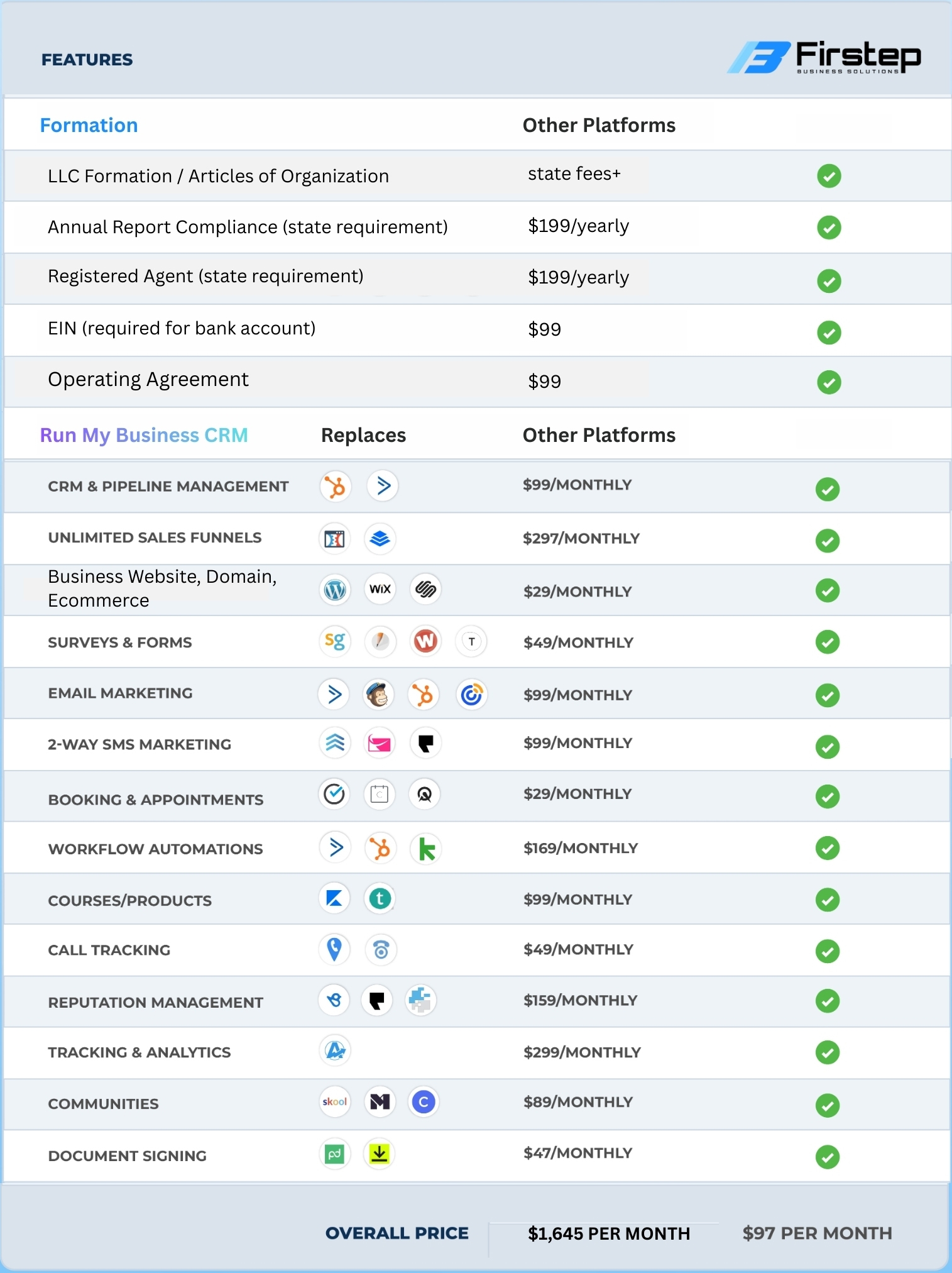
Get everything you need to launch, grow, and keep your business compliant for one flat monthly cost - forever! Cancel anytime.

INCLUDES INDUSTRY-SPECIFIC AUTOMATIONS

$97/mo Everything
  • LLC Formation / Articles of Organization
  • Annual Report Compliance (state requirement)
  • Registered Agent (state requirement)
  • EIN (required for bank account)
  • Operating Agreement
  • Business Website + hosting, ecommerce store
  • Run My Business CRM (replaces 37 apps!)

Additional usage and third party charges may apply.

$0 Formation Only

After Your Business is Formed

Run your entire business from your Firstep dashboard.

GET YOUR BRAND
ONLINE FAST

Pick from done-for-you website templates built for your industry.
Customize in minutes and launch instantly, or let AI build your site.

GET PAID IN EVERY WAY IMAGINABLE

Support every way they choose to pay. Send professional invoices with built-in payment links, sell online, or take payment on your phone.

GET EVERY MESSAGE, IN ONE PLACE

Text, email, website chat, and social DMs - all in one unified inbox. No more bouncing from app to app.
Reply to customers instantly from your dashboard - or let AI reply for you.

GET SOCIAL POSTS
AUTOMATED

Stay active without lifting a finger. Create, schedule, and post weeks of social content in minutes with AI.

GET 5-STAR
ONLINE REVIEWS

Stand out against competitors. Automatically ask happy customers for reviews that post directly to your google business profile.

GET REPEAT
CUSTOMERS

With automated marketing funnels, your clients get timely reminders, personalized offers, and thank-you messages that bring them back again and again.

Why
Choose Firstep?

  • Forget the Paperwork. We’ll do it.

  • Compliance Handled Automatically — Forever.
  • One Platform to Run Your Entire Business.

Integrate Your Favorite Tools!