FinCEN Permanently Ends Beneficial Ownership Reporting Requirements: What You Need to Know
Executive Summary: Guide to Beneficial Ownership Information Report (BOI)
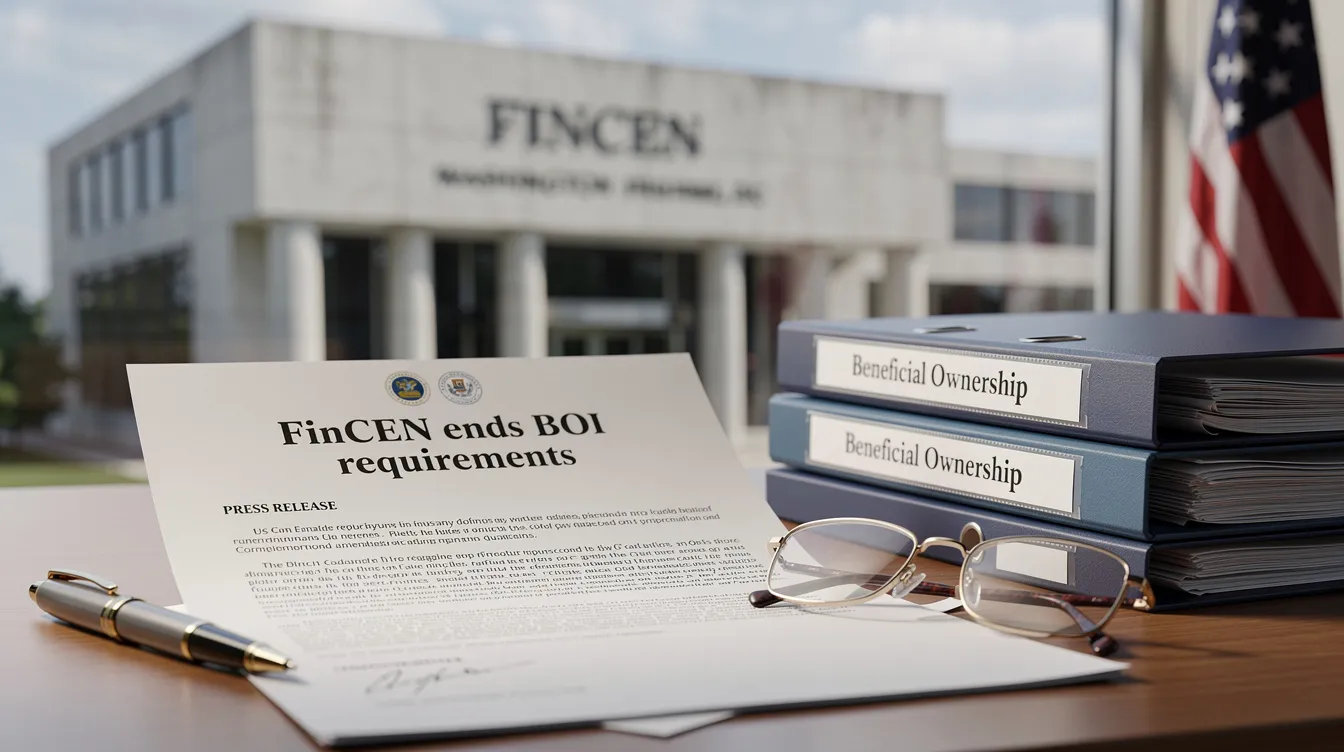
FinCEN has now permanently ended beneficial ownership reporting requirements for U.S. companies and U.S. persons under the Corporate Transparency Act, exempting millions of small business owners from filing BOI reports as of the final rule effective August 14, 2026. For U.S. entrepreneurs, small business owners, and companies trying to stay compliant, that removes a major federal filing requirement while modifying who still has to report and what steps remain under the new rule.
In 2021, Congress enacted the Corporate Transparency Act (CTA). This law was intended to help law enforcement prevent, identify, and combat money laundering, fraud, and anonymous shell companies. Under the CTA, most businesses were required to file a Beneficial Ownership Information [BOI] Report with the Financial Crimes Enforcement Network (FinCEN). FinCEN is a bureau of the U.S. Department of the Treasury. The director of FinCEN reports directly to the Treasury Under Secretary for Terrorism and Financial Intelligence within the U.S. Department of the Treasury.
Starting January 2024, U.S. businesses were expected to file the BOI report disclosing company information, beneficial owners, and company applicants. Whether your business is a corporation, limited liability company, sole proprietorship, or certain foreign business entity, the rule carried serious compliance consequences, including civil fines of more than $500 per day and potential criminal penalties up to $10,000 and possible jail time for willful violations. FinCEN’s final rule now lifts that burden for domestic businesses, giving millions of owners one less federal filing to manage so they can focus more on running and growing their companies.
This article will discuss how FinCEN’s final rule affects business owners in the U.S.. It will explain which companies are now exempt, the remaining requirements for foreign reporting companies, the data deletion process of BOI information, and explains the next steps for business owners to take to remain compliant under current federal requirements.
FinCEN Permanently Ends Beneficial Ownership Reporting Under Final Rule
The Financial Crimes Enforcement Network (FinCEN) has officially eliminated beneficial ownership reporting requirements for U.S. companies and U.S. individuals under the Corporate Transparency Act. The final rule became effective on August 14, 2026. This final rule exempts millions of small business owners from FinCEN’s filing requirement and brings relief to American small businesses and law abiding business owners. For U.S. entrepreneurs, small business owners, and companies trying to stay current on business formation and compliance rules this change removes a major federal reporting obligation and reshapes what they need to do to remain compliant.
The final rule changes how it affects Corporate Transparency Act compliance, which exemptions now apply, and what remains in place for certain foreign companies. U.S. based companies operating across state lines are often considered foreign entities in states outside of their home state. For example, if a business is registered in Florida but also operates in Georgia, it is considered a foreign entity in Georgia.
Moving forward, this type of foreign business will no longer be required to file a Beneficial Ownership Information (BOI) report.
Under the new final rule, foreign businesses registered in the U.S. must still provide ownership details for non-U.S. individuals. For example, if your main business is located in Mexico but you also do business in Arizona, you will not be exempt from filing a Beneficial Ownership Information (BOI) report.
Beneficial Ownership Reporting Requirements
BOI stands for Beneficial Ownership Information. Simply put, it refers to information about the real people who own or have significant control over a company.
Under the previous BOI reporting requirements, companies that were required to file had to provide several details about the business. This included the company’s full legal name, any trade or DBA names, and its current business address. Companies also had to provide information about where the business was formed or registered, including the applicable foreign, state, or tribal jurisdiction.
Reporting companies were also required to provide a Taxpayer Identification Number (TIN), such as an Employer Identification Number (EIN) issued by the Internal Revenue Service (IRS).
These reporting requirements came from the Corporate Transparency Act (CTA), which Congress passed in 2021. The BOI reporting rules officially took effect on January 1, 2024, and were administered by the Financial Crimes Enforcement Network (FinCEN).
Final Rule Details: FinCEN Permanently Ends Reporting For Companies and U.S. Persons
-
The final rule permanently removes the requirement for U.S companies to report beneficial ownership information, so they are no longer required to report beneficial ownership details, ending a burdensome filing obligation and cutting red tape. Only foreign companies doing business within U.S. state limits are required to report this information.
-
For example, a business based in Canada that legally operates in Michigan would still be required to file the report. FinCEN presents this as a common sense compliance rollback for exempt U.S. businesses.
-
U.S. persons now exempt under the final rule are no longer required to report beneficial ownership information, and small business owners no longer need to track changes in ownership for beneficial ownership reporting purposes.
-
Financial institutions may still request beneficial ownership details under separate customer due diligence rules.
FinCEN To Permanently Delete Beneficial Ownership Information Reported By U.S. Persons
FinCEN states that they are collectively working on permanently removing all data from the beneficial ownership information database. This will delete previously reported information regarding individuals, including company applicants, beneficial owners, and FinCEN ID recipients.
Consequently, if you have previously filed a beneficial ownership information report for your business, previously reported information by U.S. persons will be removed from the database rather than simply retained. This includes reported information by U.S. companies and U.S. persons already on file.
Exceptions: Foreign Reporting Companies Still Report Beneficial Ownership Information For Foreign Individuals
A foreign reporting company is an international business, including corporations or LLCs, that have officially registered to legally operate in a U.S. state.
Only specific foreign businesses registered in the U.S. must submit Beneficial Ownership Information (BOI), but this narrow rule still supports the main national security goals of the overall transparency policy
This requirement applies equally to foreign entities; for example, a Canadian corporation authorized to do business in Michigan must file.
Conclusion
As U.S. formed companies and their beneficial owners are no longer required to submit BOI reports to FinCEN, many domestic businesses have been relieved of an additional federal compliance obligation. Overall, the end of BOI reporting requirements for U.S. formed companies is welcome news for many business owners. With one less federal filing requirement to worry about, companies can spend more time focusing on running and growing their businesses. Still, foreign entities doing business in the U.S. may have BOI reporting obligations, so it’s always a good idea to check which rules apply to your specific situation.