Steps to Take to Create a Marketing Plan for a New Business
Introduction to a Marketing Plan
When you are launching a new business, there are many things that might feel overwhelming to deal with. From filing the formation documents, to ensuring everything is set up correctly, to beginning to market your brand and get your name out there, there are a lot of tasks to do. A marketing plan helps provide structure and direction for your marketing efforts, making it easier to turn ideas into measurable results. This guide will aim to simplify this process for you, and give you some steps to follow to be able to create a comprehensive marketing plan for your business's future and long-term success.
Here at Firstep, we are able to handle all the formation steps and make sure your business is formed correctly and follows all state regulations, but creating a marketing plan is up to you if you choose to do so. . However, we hope this guide is able to set you in the right direction and give some important insight into where you should be focusing your time, and how to plan your strategy. A marketing plan is a strategic document that outlines how your team will promote a new product, expand into a new market, or connect with your target audience. Creating a marketing plan promotes clarity and accountability across teams so every stakeholder knows what they're responsible for, by when.
What is a Marketing Plan?
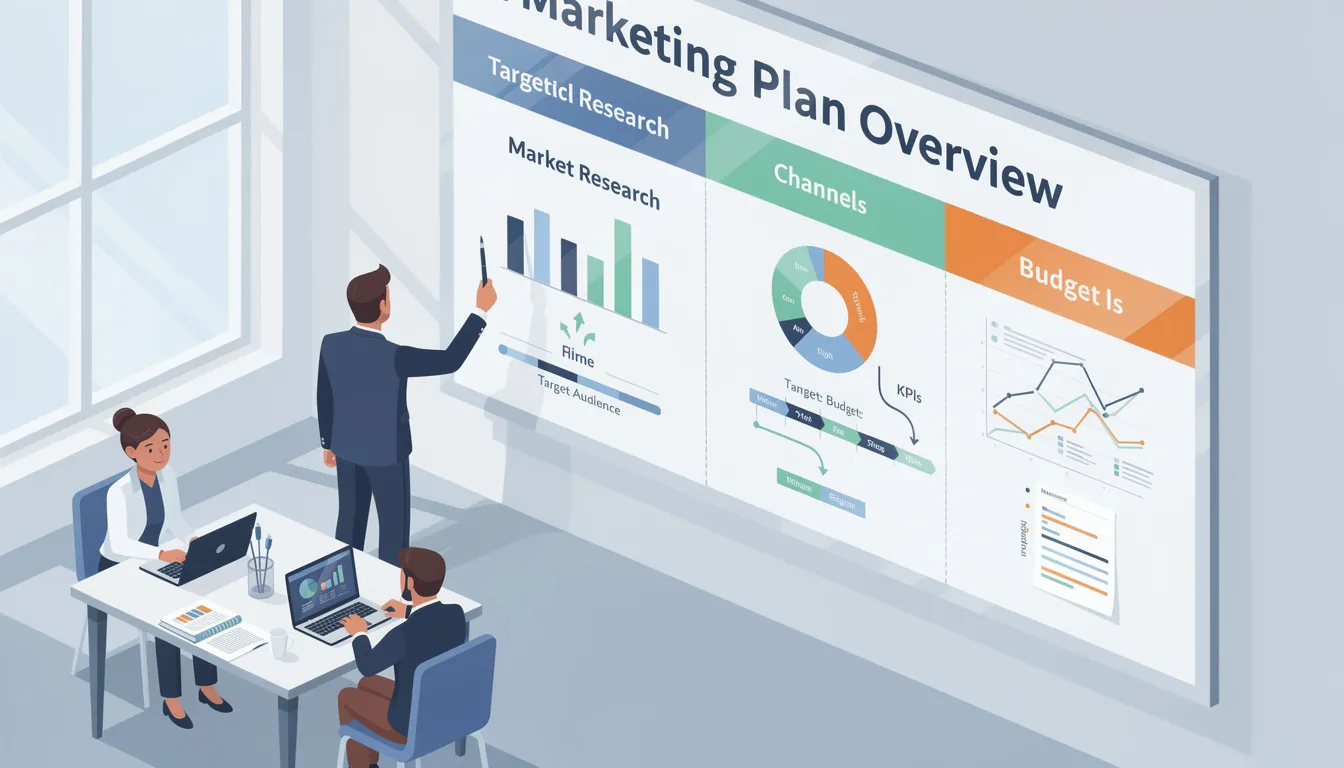
A marketing plan outlines your business’s marketing activities for a specific period, usually over the next 12 months. It is a document that details your main goals for marketing and getting your name out there. Think of it as a map that lists out your objectives, activities to meet those objectives, and a path to get there. A marketing plan outlines your intended marketing activities and provides a clear structure for your team.
Most plans will start with a healthy amount of research including market research, an analysis of your target market, and how you plan to implement these marketing objectives to reach your intended audience. Other actions like completing a competitor analysis and analyzing data from website insights will also need to be done to fully understand what it is your potential customers are looking for.
Creating a plan at the start of business operations allows you to not waste any time focusing on the wrong things, and set a clear direction from the beginning to help you meet your goals. It’s important to keep in mind you will most likely need to be tracking your efforts to understand what is working, what isn’t, what needs to be updated, and what decisions to make down the line as you reference back to your data and research collected so far.
Understanding the Company
Before you dive into the details of your marketing plan, it's essential to have a deep understanding of your company's core identity and what your business is all about. This means taking a close look at your mission statement, company values, and broader business objectives that your business operates under. When you create a marketing plan that is rooted in your company's purpose, you ensure that every marketing strategy and tactic you develop is aligned with your long-term vision and helps with managing your business goals easier.
SWOT Analysis
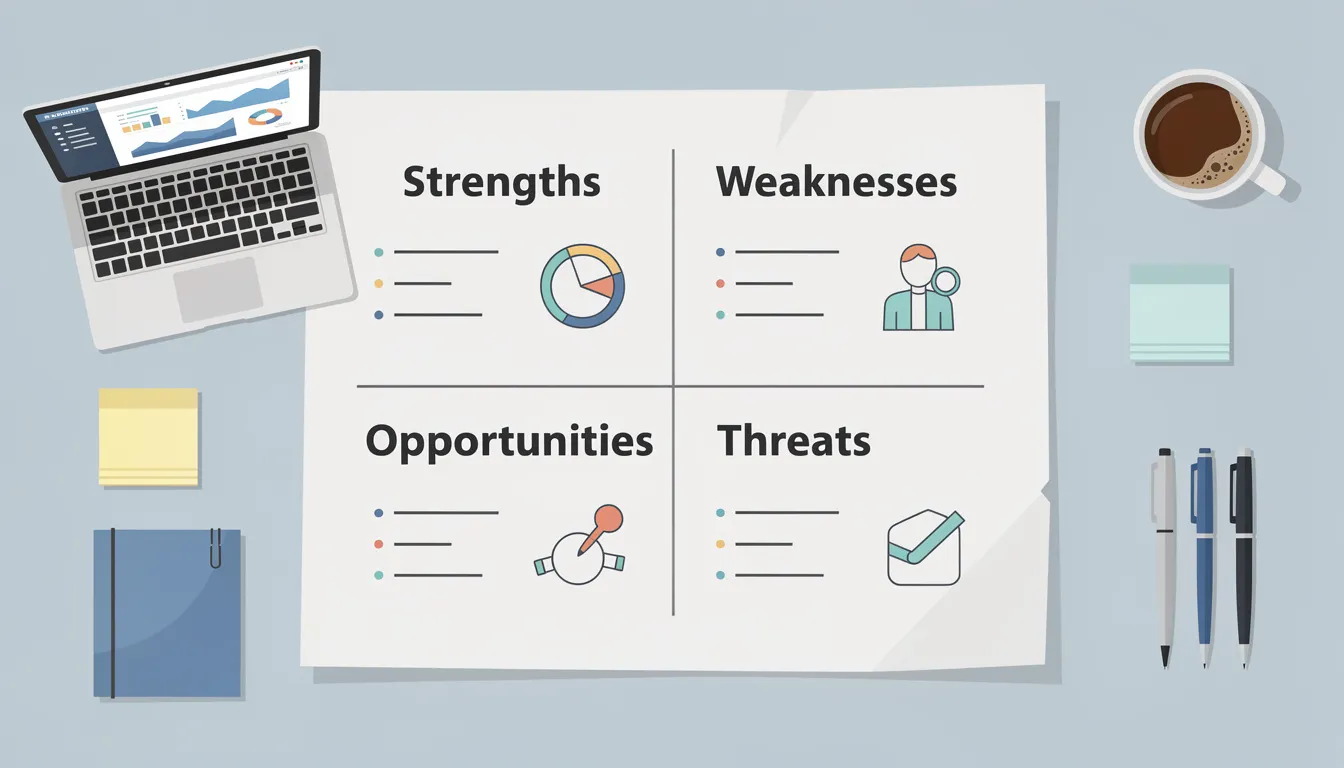
A good place to start this plan is by conducting a SWOT analysis for your business. This stands for strengths, weaknesses, opportunities, and threats. This analysis will help give you a more broad idea of the challenges you face and ways to overcome them, while giving you insights into what you perform well at and what you can improve on. If you are starting a business, you most likely have done a SWOT analysis before, but don't worry if you haven't. That's what this guide is for!
Strengths
Starting with the strengths of your business, focus on what you are able to do best in comparison to competitors in your industry. This could be anything that sets you apart such as a superior product, an experienced team with significant knowledge in this area, or an already established online or social media presence. Anything that gives you a leg up and you feel confident about. Make sure you keep these focused on your business's internal factors, as we will cover external variables later on.
This is a good place to start as you can brainstorm what you really should be focusing on, and see what is able to make your business stand out. Clearly defining what you and your team see as strengths of your business will make developing your plan for marketing much easier. This step also gives you a time to generate ideas with your team about what you excel at, and ensures everyone is on the same page with these factors before moving on.
Weaknesses
Moving on to weaknesses, this section will be things you can improve on as a business or where you need some more attention. Examples of weaknesses in this section could be limited available cash flow, small market share, or a not highly recognized brand due to being a new business. Once again, keep the focus on internal factors that fit this category. Similar to identifying your strengths, this step is able to clearly define problem areas with your team you can all agree on before moving on.
Identifying areas where you can have improvement at gives your business an idea of what to work on, and potentially as you conduct your next marketing plan these weaknesses could turn into strengths. Now that you have gathered ideas for internal factors, let's move on to external factor areas and discus how those will affect your business.
Opportunities
This section focuses on opportunities for your business that you can capitalize on. Unlike strengths and weaknesses, this will consist of external factors outside of your business. These can include things such as increased customer interest in your industry, or a focus on developing a better connection with your younger audience through social media channels.
These opportunities are things that can help your business succeed, but aren't directly tied to it. External factors are important to keep up to date on as they are constantly evolving and you and your business need to be evolving with them. These are some of the things that can significantly help grow your reach if done properly but, can also hurt your business if these opportunities are ignored.
Threats
The final section of this covers threats to your business, which would be external factors. These threats can consist of a growing competition in your industry, declining amount of workers going into this area, or laws and regulations changing that impact how you are able to conduct business. As you can see, these are factors you will not have control over as a business owner but you will have control over how your business responds to these issues.
Outside threats are important to identify because these are things that could impact how you are able to do business, hire employees, and more. Being prepared to circumstances to change, and knowing that eventually they will, can help you stay prepared and have plans in place for when things like that happen.
Conducting Market Research
Market Research
Conducting market research is the next step to take for developing your marketing plan, and this step will require you to do a few different things. First, you will start by defining the objective of the research. You will need to outline what exactly you are trying to find out, and what questions you will use to find this information out. Brainstorming with your marketing team can help develop these topics in a more comprehensive way having multiple minds working to gather ideas on this topic.
The next step will be to define your target market, target customers, customer needs, and market trends that will factor into this. Being aware of the trends of the market is important as this can point you in the right direction of how the current state of the market is operating, and analyzing this data can give data driven insights into what is the best approach to take for your business. The customer needs can be done by first hand or second hand research collection. Some ways to do this can be through surveys, focus groups, or looking at case studies on how customers are interacting with products in your industry.
After looking into all these factors, now is the time to conduct a competitor analysis. This will look at the competitors of your business, both direct and indirect, and analyze their positioning, pricing, strengths, and weaknesses. You will be able to get a better idea on how your competitors are operating and can show you better insights into what is working, what isn’t working, and who these businesses are competing with.
Once you have looked at your competitors, you will begin looking at your own business. This will include analyzing your brand, messaging, resources, and capabilities of your business. After doing this, you will be able to have a better outlook on what your business is realistically able to accomplish. You will look at your positioning, budget and resources, capabilities and what you are able to do better than competitors, and any constraints your business may have. This is an important step as by this point you have gathered information on the market, audience, and competitors and this will show you where to focus your efforts and where your business can outperform others.
Finally, comes the conclusion. Here you will summarize your findings and come to conclusions about what the best path is for your business. By analyzing all the data you have collected, you will be able to have a comprehensive view on the state of the market and how you and your competitors are navigating the wants and needs of customers. Knowing this, you will be able to create clear implications for your marketing plan and how your business will accomplish the goals you have set for it.

Defining Business Objectives
Company’s Mission
The mission statement of your business is what defines the overall purpose and values your business is striving to stand for and spread. The mission will help guide the objectives of your marketing plan and most things your business is taking apart of.
A good rule of thumb: your objectives should be specific, measurable, achievable, relevant, and time bound. Otherwise known as SMART goals, this frames your objectives in a way that is realistic and purposeful. Combined with having a comprehensive mission statement, these things give you a great plan to establish a strong brand identity and start connecting with your target audience in a better way.
Developing Marketing Strategies
Marketing Strategy
Developing a strong marketing strategy will include specific, actionable ways your business will be able to accomplish the marketing objectives you set out to achieve. A strategic marketing plan and marketing strategy are essential for achieving sustainable growth and long-term business success. This comprehensive strategy should define what channels will be used, such as social media, email, content marketing, and public relations as well as the importance of selecting the right marketing channels to reach your target audience effectively. Your plan should also outline specific marketing tactics and promotional tactics, including SEO, influencer partnerships, paid advertising, and events, to support your overall business goals and drive revenue growth.
When mapping out your strategy, be sure to include the customer journey through the sales funnel, identifying how you will convert prospects into customers at each stage. Public relations should be integrated alongside content, social media, and email marketing to enhance brand visibility and business growth.
Keep in mind this strategy should leave room to be flexible, as marketing and the tactics you use are subject to many variables and changing conditions. This allows you to continue to see success even if circumstances change that are out of your control.
Your marketing strategy should include your marketing plan, SWOT analysis, and market research that encompasses your company values and mission statement. During competitor analysis, it’s important to identify 3-5 direct and indirect competitors to better position your business. Ensuring all marketing activities are able to tie back to your business values creates a steady stream of promotion of what you are selling, why you’re selling it, and what value you are creating for your customers that purchase this. Additionally, a well-built marketing plan can build confidence with financial institutions and lenders, showing them your business has a strong chance of success.
Marketing Mix and Tactics
Marketing Mix
The marketing mix is a combination things that are considered the four Ps. This stands for product, price, place, and promotion. These aspects all combine to be a main emphasis marketers focus on that helps them build out their plan.
-
Product: This is the actual product or service that is being offered by your business. It will encapsulate all the aspects of your product such as the packaging, the design, additional features, and quality of the product.
-
Price: The actual price that customers are paying for your product or service. This also will cover any discounts that are going to be offered and the overall strategy your business uses to set the price.
-
Place: The channels you use to distribute your product and where it is sold at. This can be multiple different places such as online, at a storefront, or as a direct to consumer path such as door to door.
-
Promotion: This will be the different methods used to promote and create awareness and gain attention for your product. Things such as the advertising used, the media, and sales promotions used to sell the product your business is marketing.
To effectively implement your marketing strategy, it’s essential to create a detailed action plan and a marketing action plan that translates your strategic objectives into specific, actionable steps. Assign clear tasks, timelines, and responsibilities to team members to ensure coordinated efforts and measurable outcomes. Your marketing plan should reflect your company’s objectives and current priorities, and it should be regularly reviewed and updated to stay aligned with your business’s progress and any changing circumstances. Remember, a comprehensive marketing plan should be viewed as a living document that you update as your business grows.
Businesses should ensure they are monitoring all aspects of the marketing mix to keep their marketing objectives and methods up to date and relevant to best practices at the time. By the point you begin marketing and putting out advertisements you should have already gone through and created a marketing plan, and you should tailor your marketing mix to match your target audience for the best results.

Planning Marketing Campaigns
Once you have your marketing strategy and budget in place, it's a good idea to start planning your marketing campaigns as this is when you can really make an impact with your business. Effective marketing campaigns are built around clear marketing objectives and are designed to reach your target audience with the right message at the right time, which can help businesses connect with customers easier and allows for a more clear way to communicate your value. You'll want to start by defining the specific goals for each campaign, whether it's generating leads, increasing brand awareness, or driving sales, as having clear goals will help ensure your campaigns are focused and efficient.
Next, you'll need to choose the marketing activities and channels that will best reach your audience, such as social media marketing, content marketing, email marketing, or digital advertising as these are all great options for connecting with your audience. You'll want to develop a cohesive message and creative assets that align with your brand and value proposition, which is especially useful for ensuring your campaigns have a consistent feel across all channels. By coordinating your marketing efforts across multiple channels, you can amplify your impact and ensure that your campaigns are both focused and efficient, as this helps with reaching more customers and can lower the risk of missing opportunities. It's a good idea to regularly review the performance of your marketing campaigns to see what's working and make adjustments as needed to achieve your marketing objectives, as monitoring performance helps with understanding what resonates with your audience and protects your marketing budget from any mistakes that can be costly.
Creating a Marketing Calendar
To keep your marketing efforts organized and on track, having a marketing calendar is essential for your business. A marketing calendar is a strategic tool that helps you schedule and coordinate your marketing campaigns and activities throughout the year, and there are many advantages of having a marketing calendar for your business. By mapping out your marketing objectives, campaigns, and key activities in advance, you can ensure that your team is always working toward your business goals in a consistent and timely manner, which helps with organizing your marketing efforts better.
Having a well-planned marketing calendar allows you to allocate resources efficiently, avoid last-minute scrambles, and maintain a steady presence with your target audience, as well as helps with measuring progress easier. It also makes it easier to measure progress and adjust your strategy as needed, which is another advantage as you will be able to track your marketing performance better. Whether you're planning monthly email campaigns, quarterly content marketing pushes, or seasonal social media promotions, using a marketing calendar will help you stay organized and maximize the effectiveness of your marketing efforts. It's a good idea to create a marketing calendar when first starting your marketing planning just in case you plan to expand your campaigns at all, that way when the time comes you don't need to worry about scheduling conflicts or missed opportunities.
Implementing and Measuring Marketing Performance
Monitoring Your Marketing Plan
After rolling out your marketing plan and putting out advertisements, it’s important to monitor the effectiveness of your efforts by tracking key performance indicators (KPIs) to measure the success of your marketing campaigns. There are different tools that can help you track this, and it’s up to you which one you use. A good overall tool to help see any differences in traffic to your website and how your marketing is helping this is Google search console, or sometimes referred to as GSC. This tool is free to use, and gives you statistics on your website including clicks, impressions, top searches leading to your site, and if there are any errors in your coding and linking to your website.
When reviewing website analytics, pay close attention to your search engine results, as ranking highly on search engine results pages (SERPs) increases your online visibility and attracts more traffic. Implementing search engine optimization strategies, such as keyword research, content optimization, and link building can significantly improve your visibility and help you achieve better rankings.
Having these insights helps show you where you are excelling, and using comparisons of your metrics prior to starting your marketing plan and after can better show you how this truly performed in reaching customers. Identifying and tracking key milestones throughout your marketing campaigns ensures alignment and accountability within your team. See this and making small tweaks in your marketing can highlight better what is reaching your customers better than others, and how it affects your audience.
Lastly, setting realistic KPIs before starting your campaign can keep you focused on your goals and easily identify places you can improve at. Key metrics like Customer Acquisition Cost (CAC) measure the cost to acquire a new customer and are essential for evaluating your marketing efficiency. First, you should get a baseline before any marketing plan is put in place to be able to have a number to compare any growth in traffic to. Once you have conducted your marketing plan for a set amount of time determined by your business, check back into these metrics and determine how you are performing based on your estimations. Regularly reviewing KPIs allows your team to adjust marketing strategies based on performance data, ensuring continuous improvement.