Understanding the Difference Between a Domestic and Foreign LLC
When you’re looking to form an LLC or expand your business across state lines you’ve probably come across terms like domestic or foreign LLC. It sounds simple but this trips up new business owners all the time.
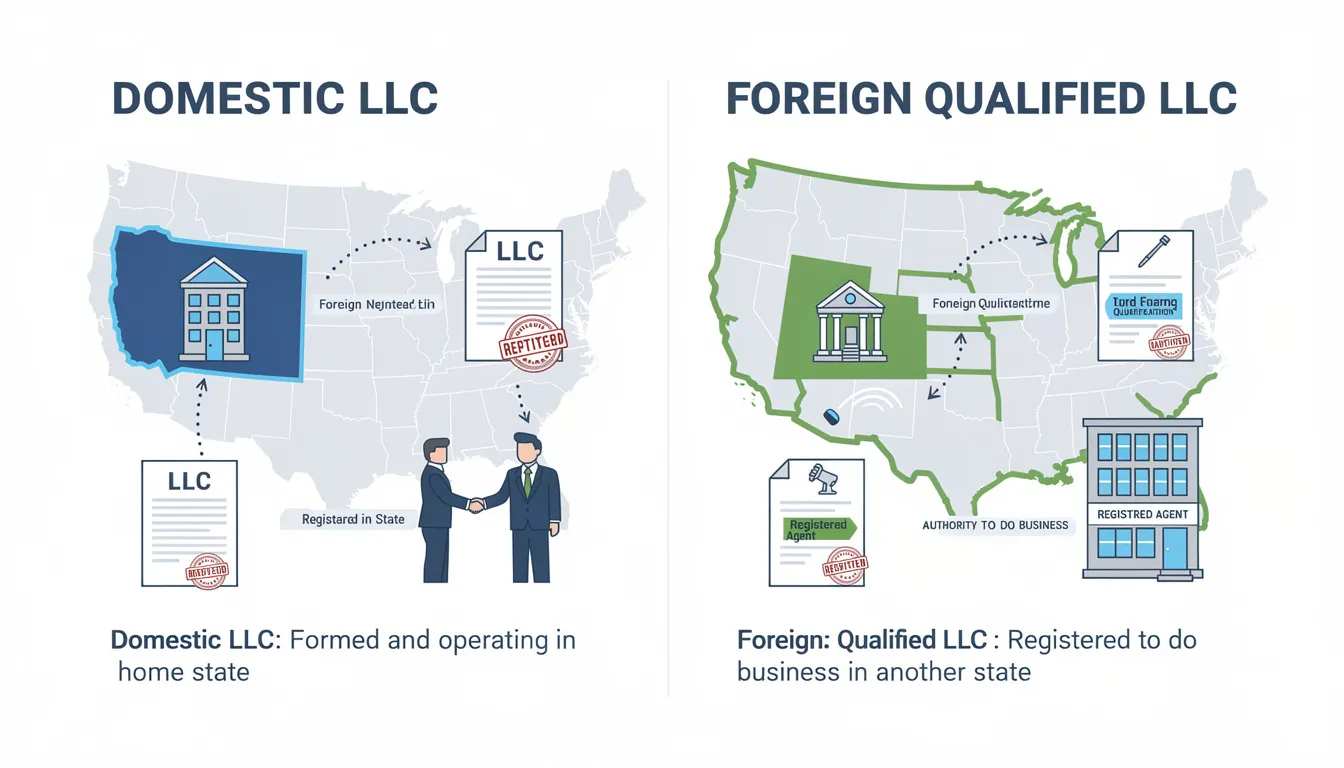
A domestic LLC is a business that is registered and operating in the state where it was formed. Such as, a business formed and registered in Florida and doing business in Florida. A foreign LLC is a limited liability company that is formed in one state, then expands to do business in another state and will need to register with the state they expanded to. For example, a business formed in Florida and operating there but expanded and opened an office in Georgia. They would need to register as a foreign LLC in Georgia to legally do business in that state.
Understanding the difference between a domestic and foreign LLC is important as a business owner and can help your businesses avoid any fines or legal issues that can occur when conducting business in a state your business is not registered in.
This guide on domestic and foreign LLCs will help inform you on the key differences between the two structures, the differences in requirements and steps to formation of these entities, and help to decide what is required and the best option for your business.
Key Takeaways
-
A domestic LLC is formed and operates in its home state while a foreign LLC is that same LLC registering to conduct business in another state.
-
Both domestic and foreign LLC status refer to US entities. “Foreign” typically means another US state, not another country. The IRS uses “foreign” differently, referring only to entities formed under non-US law.
-
The liability protection remains the same whether your LLC is domestic or foreign, but foreign registration adds extra filings, fees, and compliance requirements in every additional state where you’re doing business.
-
Most small businesses form in their home state first and only foreign qualify when they establish a real operational presence in another state such as opening an office or having regular in-state work.
-
Simply having customers or online sales in another state usually doesn’t require foreign qualification, though it may trigger sales tax obligations.
Domestic vs. Foreign LLC
The terms “domestic” and “foreign” describe the same business entity from different perspectives. ABC Design LLC formed in Illinois is a domestic Illinois LLC. When it registers in Indiana to open a studio there, it becomes a foreign LLC in Indiana, but it’s still a domestic LLC in Illinois.
A domestic LLC is one formed under the laws of a specific state and treated as “domestic” only in that state. When you file Articles of Organization with the Illinois Secretary of State, you create an Illinois domestic limited liability company. That’s your home state.
A foreign limited liability company is the same LLC when it registers to do business in another US state. By filing an Application for Certificate of Authority in Indiana, your Illinois LLC becomes authorized to operate there as a foreign entity.
The word foreign in this context means from another US state, not from another country. Both domestic and foreign LLCs are created under US law.
Whether your LLC is domestic or foreign depends entirely on which state you’re analyzing. One business can be both:
-
Domestic in its formation state
-
Foreign in several other states where it has registered
This dual status is completely normal for any business operating across state lines.
What Is a Domestic LLC?
A domestic LLC is your company’s default status in the state where you originally formed it. For most one-state small businesses, this is the only status they ever need.
Operational Characteristics
A domestic business typically has its main office, employees, and day-to-day activities located in its formation state. It complies with that state’s own rules for:
-
Annual reports
-
Franchise taxes or fees
-
Business licenses
-
State taxes
The advantage of staying purely domestic is simplicity. You deal with one Secretary of State, one set of filing requirements, one state tax, and one court system for any disputes.
A domestic LLC does not have automatic authority to transact intrastate commerce in every other state. If you want to regularly operate somewhere else, you’ll need to look into foreign qualification.
What Is a Foreign LLC?
An LLC formed in Florida that later hires employees in Georgia and opens a small office in Atlanta. To operate legally there, it must register as a foreign LLC in Georgia.
A foreign LLC is an LLC that was formed in one state but is registered to operate in another state. It’s still the same legal entity.
What “Foreign” Actually Means
The terminology trips people up constantly. A foreign LLC does not mean international or non-US.
For example:
-
A Delaware LLC is domestic in Delaware
-
That same Delaware LLC is foreign in New York once it registers there
-
It’s still a US company
The Foreign Qualification Process
Foreign LLC registration involves:
-
Filing an Application
-
Paying a state filing fee
-
Appointing a registered agent in the new state
-
Providing proof of good standing from your domestic state
Once registered, the foreign LLC must keep up with ongoing compliance requirements in every state where it operates, which includes annual reports, franchise taxes, business licenses.

Activities That Typically Require Foreign Qualification
As an overall guideline, there are certain activities that will typically require a business to register as a foreign LLC to ensure they are legally operating. One activity that will require this is if your business is operating and maintaining an office or storefront in a different state than where you originally formed your business. Similarly, owning or operating a warehouse in a different state will also require registering as a foreign LLC. Another thing that will require a foreign registration is if you are regularly having employees, sales people, or other representatives working in a state that is different than where you initially formed your business.
There are also a few others, such as working on projects outside state lines of your initial state, and it's best to look into each new state you are operating to determine if registering as a foreign LLC makes sense or is required for your business.
Activities That Usually Don’t Require Qualification
There are certain activities that your business can do that will not require it to register as a foreign LLC. These can be things like having a business bank account in another state, or attending occasional meetings and conferences in another state. Things like shipping to different states and having customers that live in another state also do not typically require a foreign registration.
Domestic vs. Foreign LLC: Legal and Compliance Differences
Both domestic and foreign LLCs provide the same core liability protection to their owners. Your personal liability for debts incurred by the business doesn’t change based on where you register. The major differences lie in registration requirements and ongoing obligations.
Maintaining Good Standing
Maintaining good standing with each state your business is registered in helps to avoid any late fees and fines. Filing annual reports, paying taxes, and operating legally are ways to avoid losing your good standing status. Whether you are registered as a domestic or foreign LLC there are requirements that must be met by your business. There are certain states that will ask for a certificate of good standing from the initial state of formation when registering in a new state.
Litigation and Jurisdiction
If you have registered a domestic LLC, this business will be governed primarily by the court system and regulations from the formation state. When you are creating a foreign LLC, you are agreeing to being sued and following the laws of the state where you are registered as a foreign in. If your business expands to multiple states, which will require multiple foreign registrations, then you will need to ensure you understand each states regulations and be aware you will be expected to follow the follows put in place by each state,
For example, if you are operating a Texas LLC that is registered as a foreign LLC in California, then you can potentially be pulled into court disputes in California over California laws, but not in Texas. This will be dependent on where you officially register and operate your business, so when expanding into new states it's crucial to understand the laws and regulations in the state of operation.
Costs and Administrative Impact of Foreign Qualification
Every additional state of registration adds its own budget line items and deadlines. Over several years, these costs can significantly increase the total expense of running your business.
For every additional state you become registered as a foreign in and are operating in will have its own requirements and fees that will need to be taken care of the ensure your good standing.
Recurring Costs
The ongoing expenses add up quickly when operating in multiple states:
The recurring costs can typically add up quickly if your business is registered and operating in multiple states :
-
Annual report fees in each state your business is registered in, including any fees and payments that are required to be submitted along with those.
-
Registered agent fees for each state
-
Franchise taxes
-
State income tax filings
Hidden Costs
Along with the clearly stated fees, there are other aspects to consider such as :
-
Time spent dealing with tracking, filling out, and following timelines for filing deadlines
-
Hiring services that take care of filings for your business so you can focus on your business operations instead of making sure your business is maintaining good standing with the state
-
Paying penalties, fines, and late fees for missing filing deadlines
-
Interest on unpaid fees
Before expanding, weigh the total long-term cost of operating in multiple states against the actual revenue or strategic benefit from each additional market.

Domestic vs. Foreign LLC for Federal Tax (IRS Perspective)
The IRS uses the terms domestic and foreign LLCs in a different way. Their usage is more traditional, as it refers to domestic LLCs as any business entity that was formed in the US. A foreign LLC, in their eyes, is any business that is formed outside of the US regardless of the state or territory they are operating in.
Even if a business is registered as a foreign LLC in multiple states, as long as it was created in the US it will be considered a domestic LLC by the IRS definition.
Where Should You Form Your LLC?
Your first decision is choosing your formation state. This choice influences where you’ll be considered domestic, and later be considered foreign from if you expand.
The Home State Advantage
Most small businesses, especially those with one or two owners and a single physical location, are usually best served by forming a domestic LLC in their home state. This is typically the best choice for your domestic formation. Having a presence in your home state before expanding into other states is a good rule of thumb to allow your business to grow organically.
Benefits of forming where you actually operate:
-
No foreign registration needed in your primary operating state
-
Lower total costs
-
Simpler compliance with one set of annual reports
-
Easier access to local courts and legal resources

Choosing Between Staying Domestic and Expanding as a Foreign LLC
The decision of registering as a domestic or foreign LLC does not involve changing your entity type. It is a decision about whether you plan to expand into a different state, or plan to grow in the original state you formed your business in. If you plan to expand into more states or attempt to grow your business across multiple states, then foreign registration is most likely the best option.
When Staying Purely Domestic Makes Sense
You likely don’t need to register as a foreign entity if:
-
Your business operates entirely online with no in-state employees elsewhere
-
Client work is performed remotely from one state
-
You have no regular physical presence or on-site service in other states
-
Your business activities remain concentrated in your home state
Signs It’s Time to Foreign Qualify
Consider registering as a foreign LLC if you are signing a lease in another state, hiring staff in a new state, or opening a warehouse, office, or storefront in a different state. All these activities will require foreign registration to ensure you are following all guidelines and laws that are necessary in each state you are doing business in. A few other things to consider are if you are performing regular long term projects in a new state, or having long lasting ongoing relationships with business partners in different states.
Make sure you have researched the laws and requirements for any state you are planning on conducting business in. These laws can vary by state and it's important to understand what will be required by your business if you were to expand into a new state.
Strategic Expansion Planning
Rather than reacting only after a problem, develop a multi-year expansion plan:
Instead of only taking action when there is an issue or a new development, it's important to make a business plan for expansion so you are prepared and not missing any crucial steps. This can be as simple or detailed as you would like, but there are few things that should be included in these plans. This includes identifying which states your business will most likely need to register as a foreign LLC first. Also, estimating the costs for each of these registrations. Doing this can help avoid forgetting to register, missing any deadlines, or not being prepared when its time for your business to start expanding and missing out on potential opportunities.
You can often phase expansion by testing a market remotely before committing to full foreign registration. This delays added compliance costs until the new market proves profitable.
FAQ
Do I need to register as a foreign LLC in every state where I have customers?
No. Having customers or making occasional online sales in a state usually does not, by itself, require foreign qualification. The key issue is whether you are “doing business” there which often means having a physical presence, regular in-person services, or ongoing in-state operations. However, you may still have sales tax or income tax obligations in states where you never register as a foreign LLC.
Can one LLC be domestic and foreign at the same time?
Yes. An LLC is always domestic in exactly one state which is the state where it was formed. That same LLC can be foreign in any number of additional states where it registers to do business. For example, an LLC formed in Colorado is domestic in Colorado but may be foreign in Arizona, Utah, and Kansas after qualifying in each of those states.
What happens if I operate in another state without foreign qualification?
States can impose late registration penalties, back fees, interest, and fines if they determine you’ve been doing business without authorization. Your LLC might also be barred from bringing lawsuits in that state’s courts until it registers and pays what is owed. Many states will still enforce your contracts against you, so you can typically cure the problem by registering and paying penalties
Can a non-US resident own a domestic or foreign LLC in the United States?
Yes. Most US states allow non-US residents to form an LLC and own domestic LLCs, and to register those LLCs as foreign in other states when needed. For federal tax purposes, a US-formed LLC owned by non-US persons is usually considered a domestic entity but may have additional IRS reporting requirements, such as disclosing foreign owners or filing specific information returns like Form 5472.