How To Start An LLC in Michigan Step by Step
When you decide to form an LLC in Michigan there are certain steps to take, and important aspects to be aware of during this process. Following a set check list helps ensure you complete all required steps. This set of guidelines would include:
-
Choose an LLC name - Your business name will be required to be unique and distinguishable from other active businesses in the state of Michigan, and include a designator in the name such as "LLC" or "Limited Liability Company".
-
Appoint a registered agent - All LLCs that are formed in Michigan are required to have an active registered agent with a current physical address in the state to receive any service of process or important notices that are sent to your business.
-
Submit your Articles of Organization - This will be what officially forms your business with the Secretary of State, and will include your business information, registered agent information, and ownership information.
-
Draft an operating agreement - The operating agreement will detail the roles and responsibilities of the owners of the business, as well as the processes for how the business operates and handles certain situations like internal disputes.
-
Obtain an EIN - This will be issued to your business by the IRS and will act as a social security number for your business. It is required for filing taxes, hiring employees, or opening a business bank account.
-
Open a business bank account - A dedicated business bank account will ensure you have a clear separation of personal and business finances, an easy way to track your business funds, and added credibility for your business.
-
Maintain good standing with the state of Michigan - This will include staying up to date on annual reports and keeping your business information updated, as well as registering for any business licenses that are required by the industry your business is in.
This guide will cover the steps new business owners will need to follow to correctly form a new LLC in Michigan. You can either choose to do this process on your own, or have a service like Firstep take care of the entire process for you. LLCs are one of the most popular business types in Michigan, as they are a flexible and simple to form type of business. LLCs also give business owners liability protection that separates their personal and business assets, which provides more security for business owners.
Step 1: Choose a Business Name For Your LLC
The first thing to do when you decide to form a new LLC is choose a name for your business. Your business name will need to be unique and distinguishable enough from other active businesses in Michigan, so it's important to check your chosen name on the state database business name search to ensure there are no conflicting names. This will be useful to know what names are being used by active businesses. If a business has been administratively dissolved then the name will be on hold for 1 year, however if the business voluntarily dissolved there will be no hold on the name.
Your business name will need to include certain designators in it like "LLC", "Limited Liability Company", or "L.L.C.". When looking through potential names, be aware that changing one letter or small tweaks to the name will typically not be enough to get your name approved. Brainstorm a few different names before choosing to form your business as this will give you some flexibility if one or more of your chosen names are taken. Avoid using terms that can be potentially misleading in your business name that do not relate to your products or services such as "bank", "insurance", "law", or other professional industries if this does not relate to your LLC offerings.
Step 2: Appoint a Registered Agent
All LLCs that are formed in the state of Michigan are required to have an active registered agent. This person will be responsible for receiving any service of process that is sent to your business, such as notices of a lawsuit or important deadlines from the state department. You are able to appoint whoever you choose as your registered agent, whether that be yourself, a trusted friend or family member, or you can hire a service to do this for you. Regardless of who you appoint, they will need to meet 3 requirements. Your registered agent will need to be at least 18 years old, have a current and active address in the state of Michigan, and be available at this address during regular business hours which are Monday through Friday 9am-5pm.
You can choose to act as your own registered agent, but this will require you to list your address on your formation and business documents and these are publicly accessible. To avoid this, consider having a close person do this for you or it can be useful to hire a registered agent service. These services are helpful as they will be able to list their business address on your paperwork, and their job is to get you these important documents in a timely manner.
Step 3: Submit Your Articles of Organization
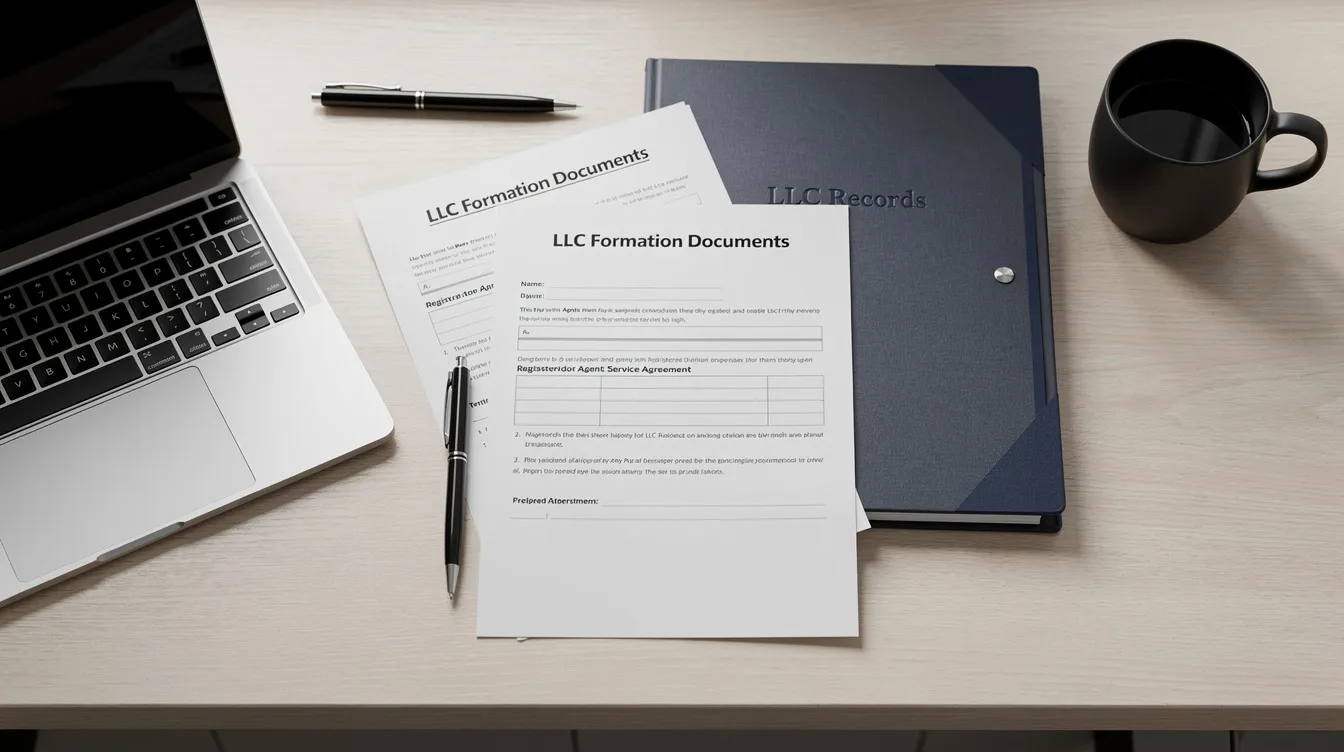
Once you have chosen your name and your registered agent, it's now time to officially form your LLC by submitting your articles of organization. You will be able to submit this form through the Michigan business portal if you choose to do this on your own. During this process, you will be required to submit your LLC name, registered agent information, business information, and ownership information. This will cost you $50 to do on your own, and typically takes a few days to a week in processing times to get approved.
You will be asked to submit your LLC name, your registered agent name, address, and email information, as well as if your LLC will be member or manager managed. Also in this form, you will need to give information on the organizers of the business and their signer capacity. This will typically be yourself, but there are other options such as having your authorized registered agent sign your articles of organization as well.
If you choose to have a service form your LLC for you like Firstep, they will be able to do this process for you. This can be helpful if you are busy organizing your business operations or planning the launch of your new product or service. Also, if you are confused on how to do this correctly these services are experts and experienced in the formation of LLCs in almost every state, ensuring all forms are filled out correctly and follow all guidelines.
Step 4: Draft an Operating Agreement
With your LLC officially formed with the state of Michigan, a recommended next step will be to draft an operating agreement for your business. This is not strictly required by Michigan for LLCs, but it can be very useful in outlining the processes and guidelines your business will adhere to. Operating agreements will define the roles and responsibilities of owners, the voting rights, decision making processes, and how to settle disputes within the business.
As your business starts to grow it's helpful to have these types of roles and solutions in writing to avoid disputes within your ownership and detail how your business will go through major decision making regarding your LLC. An operating agreement will also outline the rules and regulations for members joining and leaving the LLC, to ensure this is a standardized process. These documents can be required by banks when trying to open a business bank account, as well as potential vendors or partners when choosing whether to work with your business. The liability protection that is provided to LLC owners is also strengthened with an operating agreement as this specifies certain processes that help ensure your business is continuing the separation of personal and business assets, as well as following the rules that are required for these protections to stay in place.
Step 5: Obtain an EIN (Employer Identification Number)
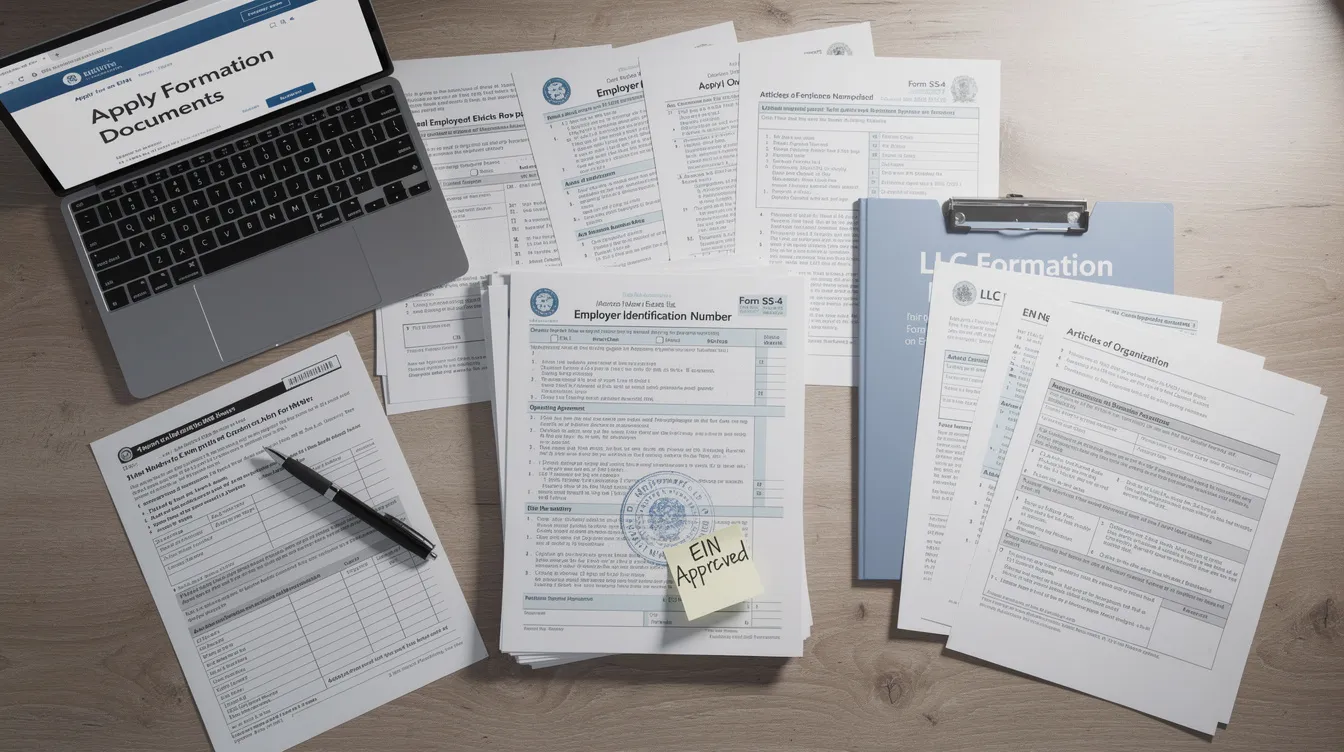
To ensure your business is able to continue to operate in good standing and easily grow, you will need to get an EIN. This is because your EIN will be used for tax purposes for your business, hiring employees, opening a business bank account, and working with vendors or partners. The EIN documents are issued by the IRS and will only be issued to each business one time, so it's important to ensure you are saving these in a safe place.
You can either obtain your EIN on your own, or you can have a service like Firstep do this for you. Since this is done through the IRS, it is very important to make sure you are inputting all information exactly how you are prompted to and not making any mistakes as this will lead to rejections and potentially very long wait times. In some cases, you might have gotten an EIN already but forgotten it or lost your documentation for it. When this happens, you can still retrieve this but it can be a lengthy process and you will need to deal with the IRS directly. Firstep is also able to take care of this for business owners, but it's important to know this will not generally be a quick process and will be dependent on the processing times of the IRS, which can vary greatly.
Step 6: Open a Business Bank Account
After you have officially formed your LLC in Michigan, you will need to set up a dedicated business bank account for your business. Having this will create a clear separation of personal and business finances, and ensure you are continuing the liability protection that is offered to LLC owners. This protection, commonly referred to as the corporate veil, will act as a shield that will protect your personal assets in the case of any lawsuits or significant debts that are incurred by your business.
Using your personal bank account to also manage business funds can get complicated especially as your business grows and is handling larger amounts of money. Trying to determine which transaction is for which purpose will be difficult, and any sort of mixing or commingling of funds can lead to you losing the liability protection that is so important for owners of an LLC. Another benefit of opening a business bank account will be the added credibility that is granted to your business by having an account only used for business transactions. As you are working with other outside vendors or partners, these entities are able to send and receive payments through your actual business name instead of your personal bank account. This can help make you seem more professional and potentially make other businesses more likely to want to do business with you as you will appear as a legitimate business. Another aspect of this is to signal to these partners that you are operating a clean business and are maintaining a clear separation of personal and business funds which helps to add to the credibility of your LLC.
Whether you are wanting to set up a business bank account to be able to easily track your business funds, keep a clear separation of personal and business finances, or for the added credibility of your business, this account will be extremely useful for business owners.
Step 7: Maintain ongoing good standing with the state of Michigan
After you have officially formed your new LLC, you will need to ensure you are staying in good standing with the state. This is one of the most important aspects to deal with as a business owner, as this will be an ongoing process you will need to complete each year. Things such as filing annual statements each year, and registering for any required business licenses that relate to your business industry.
Annual Statements
As an owner of an LLC in Michigan, you will be required to file annual statements to continue your good standing and not fall out of compliance. You can file these documents through their business portal, and if you do this on your own this will cost $26. An annual statement essentially renews your business registration with the state, and updates any information such as your business address, registered agent information, and ownership information. In Michigan, LLC annual statements are due by February 15th and need to be filed by this day to avoid any potential late fees or loss of good standing. Firstep is able to file these annual statements for you, along with offering subscription plans to ensure your business does not miss any reports in the future.
Business Licenses
Depending on the type of business or industry you are in, you might need to register for certain business licenses to ensure you are staying compliant with any state guidelines put in place. The types of businesses that will need to do this are usually professional services like healthcare, finance, law, construction, and other professional services and industries. These licenses will be filed locally in most cases, and will need to be renewed occasionally.
FAQs on LLCs in Michigan
Where do I go to file my articles of organization and annual statements
To submit your articles of organization, you will need to go to the Michigan business portal, sign in or create an account, navigate to the forms tab, and select the articles of organization. This form will cost $50 to submit and will have a processing time of a few days up to a week. After formation, your LLC will need to submit annual statements by February 15th each year. These will cost $26 and will be submitted through the same portal as your formation documents.
Do I need to live in Michigan to form an LLC in the state
No, you do not need to live in Michigan to be able to form an LLC in the state. It is advised to form an LLC in your home state first, but as long as you have a registered agent with a current address in Michigan you will be able to create a Michigan LLC. If you do not have anyone that fits this criteria, you can hire a registered agent service to act as your registered agent.
Am I legally required to have an operating agreement in Michigan
You are not legally required to have an operating agreement in Michigan, however it is highly recommended as this will outline the important procedures and rules that govern your LLC. This will be useful as your business grows and you start to need to outline processes for things such as owners joining and leaving the business.
What happens if I miss my annual statement due date and need to reinstate my LLC
If you miss your annual statement due date, which is February 15th for LLCs in Michigan, your business will fall out of good standing with the state. If you leave your business in this status for a prolonged time, you will eventually need to reinstate your LLC. This process can be done through the same business portal as annual statements are submitted, but this will cost more as there will be fees associated with it. Typically, you will pay a flat $50 fee for your reinstatement, along with $25 for each year of annual statements that have not been submitted. Doing this will catch up your LLC on all filings and return it to good standing.
What should I do if I realize there is an error or mistake on my annual statement
If you discover any mistakes in your business information, you are able to submit an amended annual statement through the Michigan business portal. These will generally cost $25 and allow you to make changes to your information that is listed on your business page. Also, if you only need to update or change your registered agent information, this will cost you $5 and can also be submitted through the same business portal.