What is a Reinstatement: Steps to Revive Your Business
Introduction to Reinstatement
The reinstatement is the process of bringing a business back into good standing with the state after being administratively dissolved. The specific process, requirements, and fees for reinstatement of a business vary by state so always be aware of your state's current rules. It's important to check the state requirements and file all necessary documents on time. Failing to reinstate a business can lead to penalties, fines, and loss of legal business standing.
This guide is designed to inform business owners, managers, and anyone responsible for business compliance who needs to reinstate a dissolved business. Failing to reinstate a business can result in penalties and loss of business privileges.
Why Reinstatement Matters
Reinstatement fees will vary by state, but to get your business back to good standing and legally conducting business again you must submit a reinstatement application to the Secretary of State's office. Business reinstatement services such as ourselves are able to handle every step of this process to ensure your business is back up and running in a quick and easy way, allowing you to focus on the day to day business operations.
Pre-Reinstatement Requirements
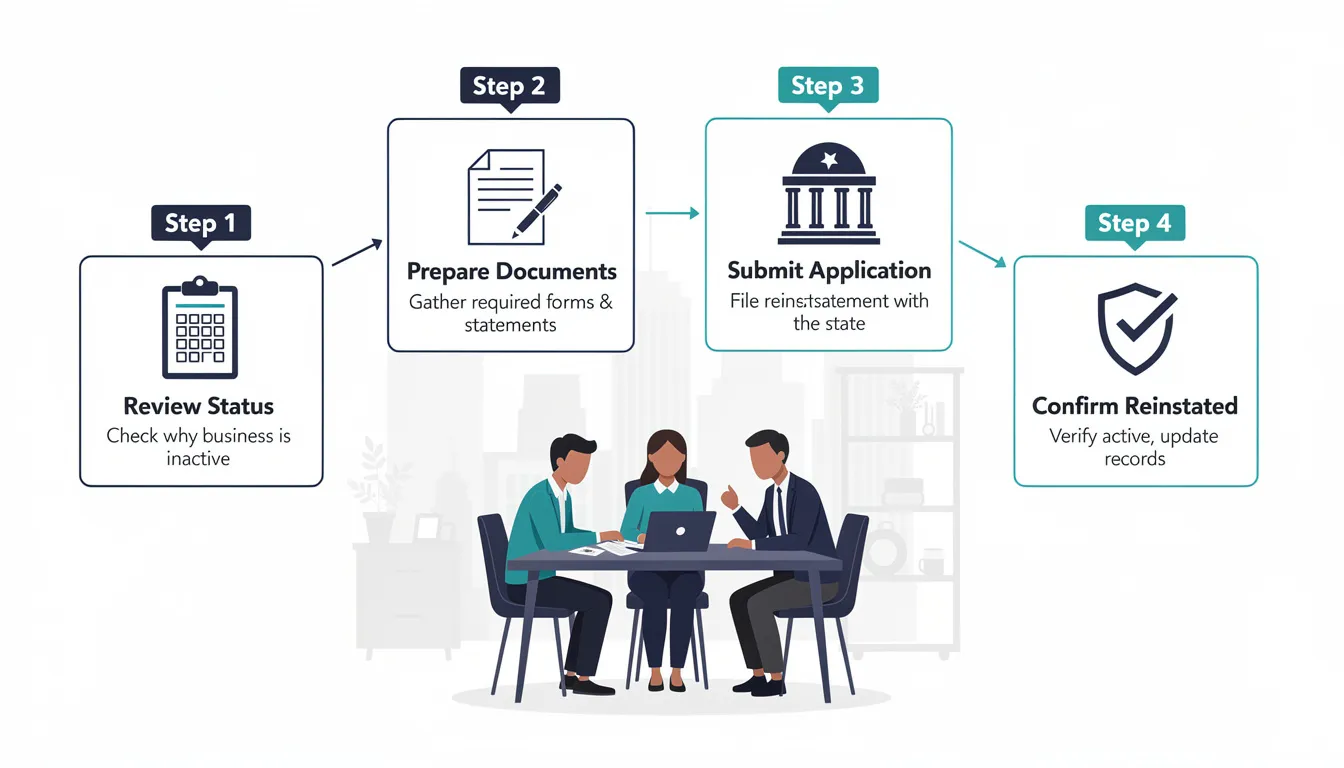
The process of reinstatement begins with resolving any underlying issues that caused the dissolution in the first place. Before reinstating a company, you must first satisfy all outstanding tax payments and catch up on any missed annual reports. This will include paying any penalties or fines and submitting the necessary forms to the department of revenue or Secretary of State.
Depending on the state your business is registered in, you may also be required to:
-
Submit a statement explaining the reason for administrative dissolution and ensure all issues are resolved either before submitting the reinstatement application or are resolved along with the application.
-
Ensure all important business information is up to date such as the business address, member information, and registered agent details. It's a good idea to check the state database to be aware if you will need to make any changes to the business information during the reinstatement process to avoid the application being denied.
Reinstatement Process
To reinstate a business, you will typically need to:
-
File a reinstatement form with the secretary of state’s office. This can be done online or by mail. Online submissions will typically have faster processing times, but you are able to do either way you choose.
-
Make sure the reinstatement form has the entity’s name, business address and other required info. Check the form for errors and omissions before submitting to the state. Any errors will deny the reinstatement and can take longer to process.
-
Pay the filing fees and penalties. These can be paid online or by check and must be included with the reinstatement form.
-
Once the reinstatement form is filed, the entity will receive a confirmation from the state. This will include the entity’s new status and any additional requirements or corrections that need to be met. Processing times vary by state and time of year so be aware of those times so you know if you need to check on the status of your application.

Post-Reinstatement Requirements
After a business is reinstated, the entity must file annual reports and pay annual fees to remain in good standing. We track all renewal dates for your business and make sure all reports are filed on time so you don’t get hit with extra fees from the state.
After the reinstatement application is approved, the business must continue to file annual reports or pay yearly fees to stay in good standing. Keeping up to date on annual reports is required to stay active.
Maintaining Your Good Standing After Reinstatement
-
File annual reports and pay annual fees on time as required by your state and business type.
-
Make sure all taxes are paid and up to date, including filing tax returns and submitting any required tax forms to the department of revenue.
-
Request a new certificate of good standing from the state if needed by submitting a request form and paying the fee.
-
Check the state’s database to make sure all information is current and up to date, including business address, officer information and other required details.
Why Business Filing Services Make The Reinstatement Process Simple
Hiring a professional service to take care of your reinstatement process for you can be beneficial in many ways such as allowing us to deal with the sometimes complicated and lengthy process. Our expert team of filers will ensure your application is submitted correctly to avoid any additional fees or rejections. This will help speed up what can sometimes be a very lengthy process if not done the right way the first time.
If you choose to opt into one of our subscription packages, we will automatically renew your business registration each year to maintain your compliance with the state guidelines. Along with these perks, we offer many more services that can help your business operate smoothly and stay in good standing such as an operating agreement, EIN, a national registered agent service, and more!