What Is a Business Plan? Key Elements and Practical Tips Explained

A business plan is a formal written document that detailshow your business will start, how it will be managed, and the ways you plan to grow. When you are starting a new business, a formal business plan allows you to have a roadmap to follow when deciding how to operate and grow your company. This plan will act as a guide for new business owners when trying to choose how they will turn their ideas into reality.
This article will cover the main aspects for what is included in a business plan and give insight into what details of this plan will need to be focused on for this to be effective. The main points that will be covered will include:
-
What a business plan is, the purpose of having one, and how they can help new business owners
-
Details on how to write a business plan, including the length, information, and key aspects of them
-
When business owners should create a lean plan compared to a traditional business plan
-
Timeline for updating your business plan and how these plans are flexible documents that need to be kept up to date and corrected
-
What types of businesses should draft a business plan and when they are most useful
-
Key points business plans help businesses with, and how they are most commonly used
Overview of What a Business Plan Is
A typical business plan is a document that describes how your business will run, operate, who your audience is, how you plan to grow, and your plan for the next few years. These business plans are comprehensive reports that go into detail on what a business owner's plan is for operations and much more. The following sections and details will need to be included:
-
Business Strategy - This will highlight your vision, mission statement, and business goals
-
Operations - Management structure, operational processes, organizational structure and chart
-
Market - Overview of target market, customer research, competitive analysis and advantages, outlook on industry trends and impacts of these trends
-
Finances - Top revenue streams, projected expenses, cost of operations, and projected sales targets and goals
By covering these key aspects about your new business it allows you to have a detailed plan to follow while deciding how to operate and grow your business. These plans can act as a map for yourself, and help to create a focus on what is most important for your business success.
These plans will typically be around 10-20 pages long, and go into detail on your business ideas in these pages. Sometimes, in what is referred to as a "lean business plan", business owners will create a shortened version that is around 1 page and only shortly covers the key details. The main use of these documents is for the speed and ease of creating them. However, when starting a new business it is highly recommended to draft a formal business page as most partners, suppliers, and vendors will request to see this to help validate your business goals and ideas.
Main Purposes of a Business Plan
A business plan helps new business owners to stay organized, acquire investors, document their strategies, and test your business idea and how effective it is. When drafting a business plan, it will require you to do thorough research on your target market and gather enough information to understand if there is an actual need for your product or service in the market.
Another main purpose of a business plan is that they are used when acquiring investors for your business. In most cases, investors will require you to have some sort of business plan drafted so they are able to easily get a feel for how you plan to run your business, and the possible customers, products, and structure you plan to have before they invest into the company.
Having a detailed business plan is able to help businesses stay aligned between different teams, departments, and operations. They create a template for certain goals and timelines that will need to be met, as well as how you plan to reach these goals as a business owner. This helps to reduce any confusion and keep businesses on track, with having clear goals and timeframes already put into place.
How a Business Plan Helps Refine Your Ideas
Drafting a business plan allows you to plan out your business concept and tweak your ideas to better fit the industry you are in. While doing the necessary market research and competitive research, you gain a clearer understanding of the needs of your potential target market and can adjust your strategies accordingly.
This type of research is extremely important for new business owners to understand what is working in their industry and identify potential competitive advantages. While creating a business plan, you will need to complete a competitive analysis as part of your market analysis section. This helps you evaluate your market share potential and position your product line effectively.
We will go into more detail on these sections later on, but it's important to understand how the different key elements of a business plan can prove to be helpful for the long-term success of your business. Additionally, this process supports making strategic decisions and adapting your marketing plan to better fit your goals.
By regularly updating your business plan, you ensure that your business stays aligned with your goals and can respond effectively to business changes and market trends, which in turn increases your chances of success.

Formatting and Structure of a Comprehensive Business Plan
Executive Summary
An executive summary section in a business plan is a 1-2 page introduction to the document that is a shortened version of all the sections. This can be thought of as a sort of elevator pitch that introduces readers into what your business is, and what you plan to do. This section will include:
-
What your business is
-
What you plan to sell
-
Who you plan to sell to
-
Where and how your business will operate
-
How you plan to bring in revenue over the next 2-5 years
Typically this section is designed to be skimmed before getting into the actual data filled sections of the plan. It's important to ensure this section is easily readable and concise enough to fit into a few pages, but also to include the important information required to describe your business to potential partners or investors.
Business Description
This section of your business plan will be about your business and how it began. This will include things like who founded the business, when it was founded, where it was registered, and type of structure the business is (LLC, Corporation, Nonprofit, Sole Proprietorship).
You will also need to provide information on ownership percentages, the main pain point your business is planning to solve for customers, and your main business model.
Ensuring your business documents are all aligned and your business value and mission state connect with your description talks about your business.
Products and Services
The products and services section of your business plan is going to focus on what products or services your business will be selling, why your product would be chosen over competitors in the industry, and the features that make your product stand out.
This section should include the following points:
-
Main product offerings (physical products, subscription services, digital products)
-
Expected price ranges and strategies, and how they compare to similar businesses in the industry
-
How your product will be able to solve customer's problems and meet their needs
-
What stage of the product lifecycle your product is current in, and how you plan to progress
It's also important to detail your plan for the next products you want to develop, and how you plan to do this. This helps to show investors or potential partners your plan for the future and for expansion of your current business offerings.
Market Analysis
The market analysis portion of your business plan is important for showing an understanding of your target customers, current competitors in your industry, and the market as a whole that you plan to enter into. This will require thorough research into both the industry and specific competitors, which will benefit you also by having a better understanding of how these aspects prior to launching your product or entering into a new market.
You will want to look at data on the market size and growth rates, emerging trends in your industry, typical customer demographics and the purchasing behavior of these customers, geographic data, and a competitor analysis of at least 3-5 top competitors in your industry. These factors all give you a clear outlook for how you stack up against competitors in your industry, what trends that are driving success, and who the main customers you will be targeting are.
The market analysis section is going to require data driven information on what the best practices are currently in the industry, and potentially how these are changing for the future to better prepare for business for capitalizing on these trends.
Marketing and Sales Strategy
This section will be all about your plan for marketing your business, attracting leads and customers, and building a strong customer base over time as you grow and expand your business. In the early stages of your business this is very important as you will need to find ways to make potential customers aware of your business and how you are able to meet their needs better than the competition.
Things to include in this section will be specific actions related to:
-
Email marketing campaigns
-
Social media marketing strategies
-
Local SEO, collaborating with other local businesses, and hosting events for your community
Planning out the strategies you will be using for these aspects will help reduce overspending on certain activities and give you a more comprehensive marketing effort rather than only focusing on one of these metrics and leaving out others. SEO and social media are going to typically take more time to see the impacts of, while email marketing and online advertisements can give you an initial boost after making an investment into them. However, all these strategies combined together make for the best outcomes as you are marketing across multiple mediums and reaching the most customers as possible.
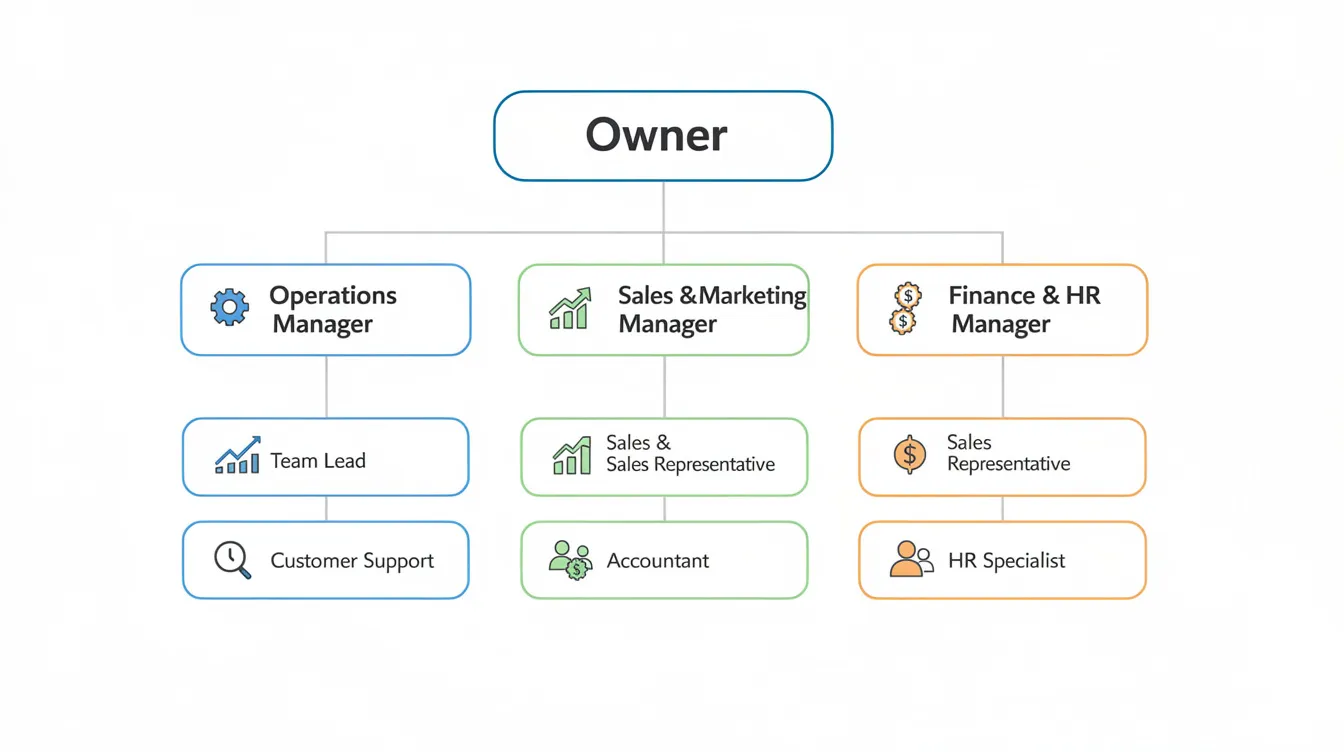
Organizational and Management Structure
This section of your business plan will outline the management structure of who runs the business, how you have delegated responsibilities, and how operations will be run daily. Sometimes it can be helpful to create an organizational chart if you have multiple layers of management within your business, as seeing this mapped out in an organized way can make understanding this aspect a bit easier for potential investors and partners.
Be sure to cover the key aspects such as the ownership structure, the people who founded the business and their relevant experience, any plans for hiring management in the near future (next year or two), locations of your business, what days and hours your business will be open, and the main suppliers you will be using and any deals you have already made.
This section will also be where you reiterate your official business structure (LLC, Corporation, Nonprofit, Sole Proprietorship) as well as the state of formation of your business. You can also include your relevant registered agent details and EIN information to show potential investors you have gotten everything needed to be prepared for a full operational business.
Financial Projections and Plans
The financial section of your business plan will essentially be translating the rest of your plan into real numbers that are able to be measured and are data driven projections. These relevant documents will include things such as next years financial projections, previous years financial statements (if applicable), cash flow statements, and balance sheets.
It can also help to give short descriptions for these documents as they can be confusing to understand, and if you are able to highlight important numbers such as projected revenues, costs, and investments it can help quickly navigate these documents for some of the most important information.
You also should include other relevant spending and revenue data such as your average sale volume, average monthly sales, marketing spending, and hiring or employment costs. This helps to give a clear breakdown of what you can expect based on previous data on these aspects.
You will need to factor in other miscellaneous costs such as cost of formation of the business, annual renewals, any industry specific business licenses, patents, and outside agent or consulting services, and software costs used to run your business.
Appendix and Supporting Documents
The appendix of your business plan will include any relevant information and documents that your plan refers to in previous sections. These will be things such as contacts or leases, resumes of the founders of the business and those in top management positions, product mockups or illustrations, and legal documents (articles of organization, operating agreements, business licenses, etc)
This section will need to be clearly labeled and organized so these documents are easy to find. Be sure to only include things that are referenced in the body sections of the business plan, such as projected numbers, claims made about your business or competitors, and any other relevant information that is used in your business plan to support your claims.
Choosing The Right Business Plan For Your Situation
Depending on the purpose of creating your business plan, not every business owner will need to create a fully comprehensive 10+ page plan. Choosing between a lean business plan and a traditional business plan will be determined by your business goals, industry, funding, and requirements for creating the business plan.
Choosing a lean business can make sense when you are:
-
Testing an idea before fully committing
-
Operating on very little funding
-
Having conversations about business ideas with mentors, consultants, or similar advice focused partners
A traditional business plan will be required when you are:
-
Pitching your business idea to outside investors or asking for significant investment amounts
-
Launching a high risk business that has a complex structure or operations
-
Doing business in highly regulated industries such as healthcare or law
If you are just forming your business and want to get a head-start, a lean plan will suffice for a short time while you are building your business and before taking on any investors or outside help. However, once you plan to reach out to outside investors or take on significant loans you will most likely need to create a comprehensive business plan.
Regardless of whatever business plan you choose to make, it's important to do the correct research on the industry and topics you will be covering to ensure the information in the plan is backed by relevant sources rather than you guessing or assuming the industry is one way when it could be the complete opposite. This market research and other data driven insights helps you not only make your business plan, but helps you with making decisions down the road as you grow in your industry.
Updating Your Business Plan Periodically
Your business plan will need to be reviewed and updated regularly as your business grows and expands. Writing a business plan once and forgetting about it will only lead to a more complicated process later down the road when you need to eventually update it. A review schedule can help avoid these long periods of time where you are not updating the plan, and will make these updates much easier to complete.
Although every business is different, a good standard schedule for these updates will be as follows:
-
Growing startup business - Update once per quarter
-
Stable small business - Update once per year
-
Pre-funding and formation of the actual business - Update monthly to reflect any changes to your ideas for the new business
These different schedules will vary depending on your exact situation, but generally you will not want to go more than one year without updating, with more frequent updates required for businesses that are fast growing or still in the planning phase. There are certain actions that will make sense for you to update your business plan, such as launching a new product, changes to your business or management structure, or looking for new investors.
Business Plan FAQs
Do I need a business plan before forming an LLC or corporation?
While most U.S. states don’t legally require a business plan to file Articles of Organization or Incorporation, having at least a short written plan before forming is strongly recommended. A plan helps you choose the right structure (LLC, S-corp, C-corp) and estimate whether the extra cost and compliance responsibilities make sense at your current stage. Firstep often helps founders align their structure choice and state filings with goals outlined in their business plan.
How long should my business plan be in 2026?
The ideal length depends on purpose. A lean plan can be one page, while a full traditional plan for bank funding is often 15–25 pages plus an appendix. Clarity and relevance matter more than hitting a specific page count. Start lean and expand only if a lender, investor, or partner asks for more detailed information.
Can I write my own business plan without hiring a consultant?
Most small business owners can write their own plan using free templates, online guides, and basic spreadsheets. Get outside feedback from mentors, accountants, or advisors on your financial projections and market assumptions. Services like Firstep can complement your plan by handling legal formation, registered agent services, and compliance tasks you identify in your strategy.
How often should I update my business plan?
Fast-growing startups should review and adjust plans every quarter. More established businesses can update annually. Common triggers include launching a new product, entering a new state, changing business structure, or seeking new funding. Keep a digital version for easy revisions, and save dated versions to track how your strategy evolves.
Do banks and investors still care about business plans in the age of pitch decks?
While many investors see a slide deck first most serious lenders, especially banks and SBA programs, still expect a written business plan with financial statements. A pitch deck works for introductions, but a detailed plan gives decision-makers confidence in your numbers and operational thinking. Treat the business plan and pitch deck as complementary tools built from the same core research.