Trends Affecting Business Success in 2026
Introduction to Business Trends
In recent years, businesses have been required to adapt to faster and change more than ever before. With new developments and technologies emerging in what seems like almost everyday, business owners have needed to shift their focus and prioritize these trends in real time as they evolve. With the ongoing development of AI tools, customer relations and engagement, and more technologies included in aspects of business management, business owners that face these changes head on have shown more success sometimes than those with superior products that avoid engaging in these trends. Business investment decisions are increasingly shaped by these evolving trends and uncertainties, making strategic planning and risk management more critical than ever.
This article is aimed to educate new and existing business owners on the main trends that are expected to affect businesses this year, while showing examples of how you can utilize these new developments to your advantage as you navigate the business world. Especially for small businesses, these tools can make operating your business much more simple and be a large factor in your small business success. AI adoption is becoming a major trend, with its integration into business processes supporting automation, real-time analytics, and modern infrastructure to improve efficiency and competitiveness.

Core Operations and Management
For small business leaders, getting good at core operations and management is more important than ever in 2026. As the business world changes fast, being able to make core operations run smoother can be what makes the difference between doing really well and just getting by. When you focus on making business processes work better, small businesses can get customers more interested, make performance management better, and cut down on what it costs to operate.
Using AI tools and generative AI is something that can really change things for small business success. These technologies can take care of administrative tasks that take up too much time, which frees up valuable resources that you can use for strategic decision making and changing how your business works. Looking at data and making decisions based on data are now parts of any business strategy that you need to have, and they help business leaders find opportunities for growing and areas that need to get better. Keeping your data quality high is something you have to do. When your data is accurate it makes sure that the insights you get are reliable and you can actually do something with them.
Regulatory compliance is another important area that you can't just ignore. Staying compliant doesn't just protect your business but it also makes customers and partners trust you more. At the same time, when you integrate sustainable practices into your core operations it can reduce how much your business impacts the environment and appeal to consumers who are caring more and more about eco-friendly things.
When you embrace new technologies and keep working on making core operations better, small businesses can make efficiency better, make sure they stay compliant, and get themselves positioned for success that lasts a long time in a market that has a lot of competition.
Generative AI
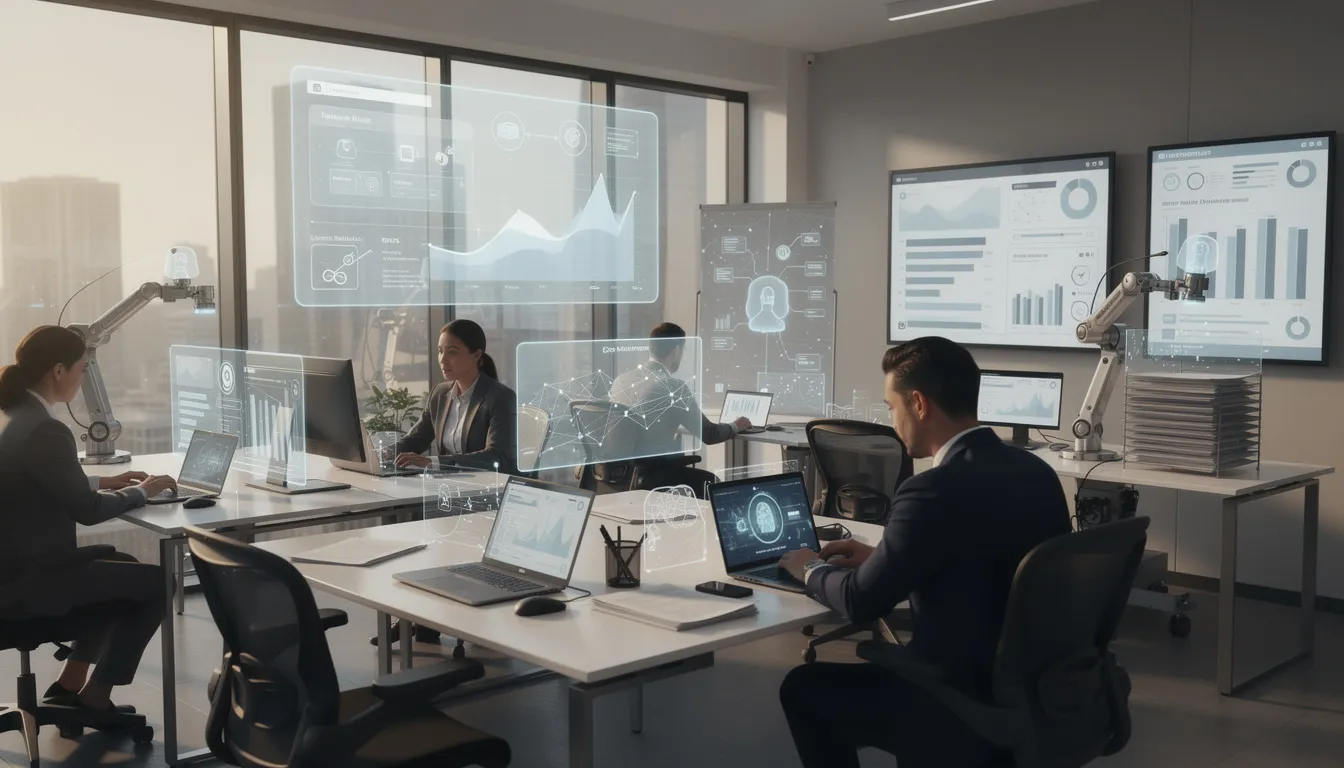
It’s difficult to talk about trends in any industry without mentioning the emerging technologies of artificial intelligence. AI has the power to impact almost every aspect of your business strategy and make these processes easier for you. Although there are many applications of this technology, there are a few that are most important to focus on. In 2026, AI is expected to be integrated into core business operations, moving from experimentation to daily use.
AI can greatly increase your productivity in your marketing strategies. You can use these tools to generate graphics for your social media, writing for advertisements, creating email marketing campaigns, and much more. As a small business owner it can be very beneficial to get this added help especially as you are just beginning and might have little to no staff to work alongside. The benefit of data driven decision making for new businesses helps to shape your goals and product offerings that have the best chance of success for you and your business type. Things that historically have taken hours and hours can now be done in a fraction of the time with added insights that are able to give you a competitive edge. The transition from AI pilots to enterprise-wide production deployments will occur as infrastructure and governance improve.
Administrative tasks are also simplified as most paperwork and repetitive tasks can be enhanced by the use of AI tools. During this age of digital transformation, being an early adopter of the use of AI and similar tools can greatly help your business, especially in its early years, as you are able to focus on more of the business operations instead of the administrative burden business owners typically face. The collection and data analysis of complex data sets are able to highlight specific aspects where your business is succeeding at, where you might need to focus more attention at, or where is performing at the baseline of your industry. These insights can be valuable to show where it is best to spend your time and ensure you are not wasting hours on something that might not give your business much of an advantage. Companies that treat AI as a governed capability by implementing controls, documentation, and trust will be better positioned for adoption as it accelerates through 2026.
While AI tools are powerful, human judgment remains essential for making strategic decisions and selecting the right innovations, especially in uncertain environments.
Customer Experiences
Now more than ever, word is able to spread about your company at extremely fast speeds. In this age of social media and how connected everyone is through their phones, one bad interaction with a small business can reach thousands of people and create a bad image for your brand. Customer expectations are evolving rapidly, and in 2026, small businesses must adapt to rapidly changing consumer expectations driven by technology and demand for personalized experiences. Consumer expectations in 2026 will increasingly focus on fast, digital experiences and personalized interactions. Regardless of this, ensuring all interactions with your customers are positive can create a strong relationship between them and your business and increase customer engagement rates. Generating positive reviews are a great way to show your businesses effectiveness and is able to attract more customers as they search online and on your website and see these good reviews. Personalized, frictionless experiences drive loyalty, repeat business, and referrals.
Another emerging trend in the business world for 2026 is the increased size of customer service teams as AI has helped to automate certain sales aspects. Although sales teams might not need to grow on the same scale as previously, customer service is still a huge aspect of the customer experience and helps shape how consumers think and feel about your business after these interactions. Customer loyalty programs help emphasize this as these will tend to create more of an open line of communication between your customer service team and customers.
To remain competitive in 2026, businesses must adapt their strategies to address the rising standards for customer experience and personalization. Monitoring how small business trends are being shaped helps you stay ahead of the curve, and also stay on top of the needs of your customers. One-size-fits-all marketing is failing, and winning businesses are using deep customer data to tailor every interaction. In 2026, small businesses are winning customer loyalty by tailoring every interaction, from marketing messages to product recommendations.
E Commerce Importance
With the major focus now on social media and AI tools used to answer customer questions, having an established foundation for e commerce sales will make acquiring and retaining customers much easier and more accessible to those who primarily shop online. Cloud computing enables scalable, secure e-commerce platforms and supports digital transformation for online businesses. For starters, a well designed business website that is easy to navigate is pretty much a requirement nowadays. Customers like to do their own research before making purchases and having organized information on your website about your product offerings, customer experiences, and an easy way to go through the purchasing process make them more likely to stay on your website and choose your business over competitors. Effective digital operations are essential for providing seamless online experiences and meeting customer expectations.
Along with your marketing strategies, using the information collected through insights on your social media can help with data driven decision making. These insights show you which posts are performing the best and will help show which offerings your customers are most interested through looking at the customer engagement difference on these posts. Accurate data entry is crucial for maintaining up-to-date customer information and ensuring effective sales and customer relationship management. For businesses that are mainly selling products online, it will be a bit easier to get insights and see data about their purchases as compared to selling in person.
Small businesses are expected to leverage e-commerce and strategies to enhance visibility and sales in 2026.
Data Driven Decision Making
A major trend in recent years that will continue to evolve is the analysis of data and using that data to make important decisions about your business strategy. With the development of technology it has become increasingly easier to collect different types of data, which can be very valuable for business owners to use. Business intelligence is becoming a key tool for transforming data into actionable insights and supporting strategic decision-making. Along with this, the use of AI tools helps organize this data into sets that are easy to analyze without requiring a significant time investment by you to do this.
As with most of these trends they have mainly been aimed at making business processes easier, and the inclusion of artificial intelligence combined with these different trends has the chance to do this. Optimizing business process through automation and analytics enhances operational efficiency and supports data-driven planning. Be sure the data quality is strong, as collecting bad data will only give you bad outcomes. Effective data collection is the foundation for reliable analytics and compliance. Think of the term, “garbage in, garbage out”. If you are giving AI tools bad information it will more than likely produce bad results.
Deciphering the consumer behavior and how they interact with your business pages is a great start, but this is likely to go much further. Data science skills are increasingly important for analyzing complex data sets and generating business insights. Automated messages that promote customer loyalty, developing key performance indicators based on set goals, and help with the strategic decision making for business operations are all expected to have some sort of artificial intelligence aspect for them in the coming years.
Although AI is growing and more powerful than ever, it requires real people to make the best use of it. These tools can only do so much, and will need humans to be able to make the decisions based on this data they create. Economic conditions in 2026 will require businesses to evaluate multiple scenarios for sales, cash flow, and working capital. Small businesses will increasingly rely on data-driven decision-making to meet consumer expectations effectively. The integration of AI tools into daily operations will be essential for small businesses to adapt to consumer expectations in 2026.
Industry Trends
Staying ahead of industry trends is something that small business leaders need to do if they want to remain competitive and drive growth for their business. In 2026, there are several key trends that are shaping the business environment that your business will need to deal with. The continued rise of e-commerce sales is transforming how small businesses reach and serve their customers, which makes digital transformation a top priority for your business. Investing in robust e-commerce platforms and digital systems allows your business to meet evolving consumer expectations and capture new market opportunities that are available.
Artificial intelligence is another trend that is reshaping industries, and this enables smarter workforce planning, more personalized customer experiences, and streamlined business operations for your business. Skills-based hiring is gaining traction and this helps businesses address the persistent skills gap that exists and build agile teams that are ready to adapt to change when it happens.
Sustainable practices are no longer optional for your business. Consumers increasingly expect businesses to demonstrate environmental responsibility and show that they care about the environment. Building strong online communities and leveraging data pipelines for real-time insights can help your small business foster loyalty and make informed decisions that are good for your business. Additionally, remote work models are becoming standard for many businesses, and this offers flexibility and expanding the talent pool for small businesses that want to hire employees.
By understanding and responding to these industry trends that are happening, small business leaders can capitalize on emerging opportunities that come up, mitigate risks that could hurt their business, and ensure their businesses are prepared for the future. It's a good idea to stay on top of these trends when running your business so that when changes happen you don't need to worry about being left behind by your competitors.

Emotional Intelligence and Leadership
In today's business world that moves really fast, emotional intelligence and good leadership skills are something that you will need if you want your small business to be successful. Small business owners who work on developing soft skills like empathy, being self-aware, and communicating effectively are going to be better at building strong teams, keeping customers loyal, and dealing with all the uncertainty that comes with running a business.
When you have emotional intelligence as a business leader, it helps you make better strategic decisions, change your business when you need to, and adapt to new technologies like AI tools and generative AI that are coming out all the time. These skills are really important for managing your day-to-day operations, making sure your customers have good experiences, and staying competitive while you keep your operating costs under control.
When you prioritize developing your leadership skills and stay on top of the key trends that are happening, your small business can create a positive work environment, inspire people to be innovative, and achieve growth that will last in a marketplace that is always changing.
What All This Means For Business Owners
Monitoring these trends as a business owner can give you an advantage by being an early adopter of these new practices and help automate business processes. Risk management is a critical component of modernizing and safeguarding business operations, especially in uncertain times. More companies are applying the top trends to help their business, and as the technology gets better and better, the further behind you will be if you choose not to stay ahead of the curve.
Automation is transforming business operations, and is becoming increasingly important as small businesses look to outsource HR functions and manage employee benefits efficiently.
Ensure you and your business are staying up to date on the emerging trends throughout the year as there is sure to be changes from now through the end of the year. Supply chains are being reconfigured as companies diversify to reduce risk amid tariff volatility and global disruptions. Persistent inflation and elevated interest rates are shaping business decisions about pricing, liquidity, and investment. There are multiple things you can do that make monitoring these trends easier, such as using AI. Having AI agents made that update you on the newest business technology news once a week will enable AI systems to generate a document that summarizes the latest business technology news for the past week to keep up to date on the newest trends. The labor market is evolving, requiring small business owners to understand their capital constraints, talent needs, and market position to act strategically.
Businesses will need to demonstrate financial, operational, and digital trust to gain easier access to capital and customers. Businesses that can demonstrate these traits will have easier paths to success and growths in 2026.