Effective Content Marketing for a Small Business: Essential Strategies
Key Takeaways
-
Content marketing is a cost effective way for small businesses to increase brand visibility and generate leads, offering a budget-friendly alternative to traditional advertising.
-
Consistent content and a clear content strategy are essential for building brand authority and trust with your target audience.
-
Following content marketing tips for small businesses can help maximize your results and improve your online presence.
-
Maintaining a consistent brand voice across all content formats such as blogs, social media, and videos strengthens your brand identity and credibility.
-
Content marketing requires consistency and patience to yield results over time, so stay committed to your strategy.
-
Effective content marketing helps build brand authority, improves visibility, generates leads, boosts customer loyalty, and educates your audience, often at a lower cost than traditional advertising.
What Is a Content Marketing Strategy For a Small Business
A content marketing strategy is used by businesses to attract customers and users through creating valuable content that relates to your business activities and offerings. These are typically done by producing things such as blog posts, videos, video scripts, social media posts, case studies and testimonials, and behind the scenes content. All these options are low-cost and have proven to be an effective way to supplement your traditional advertising efforts to create an added layer of trust and ways for customers to find your business. Distributing valuable and relevant content is essential to attract and retain your audience, support brand authority, and improve SEO.
Content marketing will help small businesses by allowing them to show up on more organic search results without having to spend large amounts of money on online advertisements. While users go along the customer journey, your content can be helpful in giving them a way to find educational content to inform them on their decision as well as confirmation on the value your business provides through case studies and testimonials from past customers. Blogging remains a cornerstone of content marketing and is an effective way for small businesses to provide value and showcase expertise.
This type of posting can signal to users your expertise, and help build your websites topical map to better meet users needs and answer questions they might have. A focus on the most frequently asked questions customers have as well as descriptions of your products and services and how they provide value to users are typically high performing sections of this type of content.
Video content is also increasingly popular and engaging, allowing small businesses to highlight unique products and share stories about their business.
Producing high-quality content can establish thought leadership and position your business as an authority in your industry.
Why Small Businesses Should Use Content Marketing
Content marketing allows for small businesses to be able to compete with the larger businesses in their industry without being able to match their spending budgets on marketing and advertisements. As you are creating helpful and useful content consistently, you are able to build brand awareness and trust between you and your customers that you can’t buy with advertising. Content marketing is also a powerful way to attract new customers and increase brand awareness for your small business. Common advantages to content marketing include:
-
Building trust in your business - Posting content that educates customers and shows your expertise such as a tax professional posting about tax filing deadlines and tips will be a good source of information and customers will remember this when they are searching for help with their taxes.
-
Cost Effective Marketing - Using content such as blog posts and guides are able to produce leads and conversions without having to spend large amounts of money on advertising
-
Benefits to SEO - Producing consistent, high quality content that helps your business rank higher on search results and builds authority within your industry online
-
Improving Conversions - Putting out content that answers the most common questions customers ask, as well as content that highlights testimonials and case studies informs users of what you provide without having to be overly salesy. Content marketing relies less on traditional sales pitches and more on building trust and educating prospects, which helps convert potential customers. This type of content makes taking customer calls easier as they are not confused about your business, and do not need to have your purpose or expertise level explained to them as often
Content marketing focuses on delivering value before asking for a sale, which helps build loyalty throughout every stage of the customer journey.
Types of Content That Small Businesses Can Use For Content Marketing
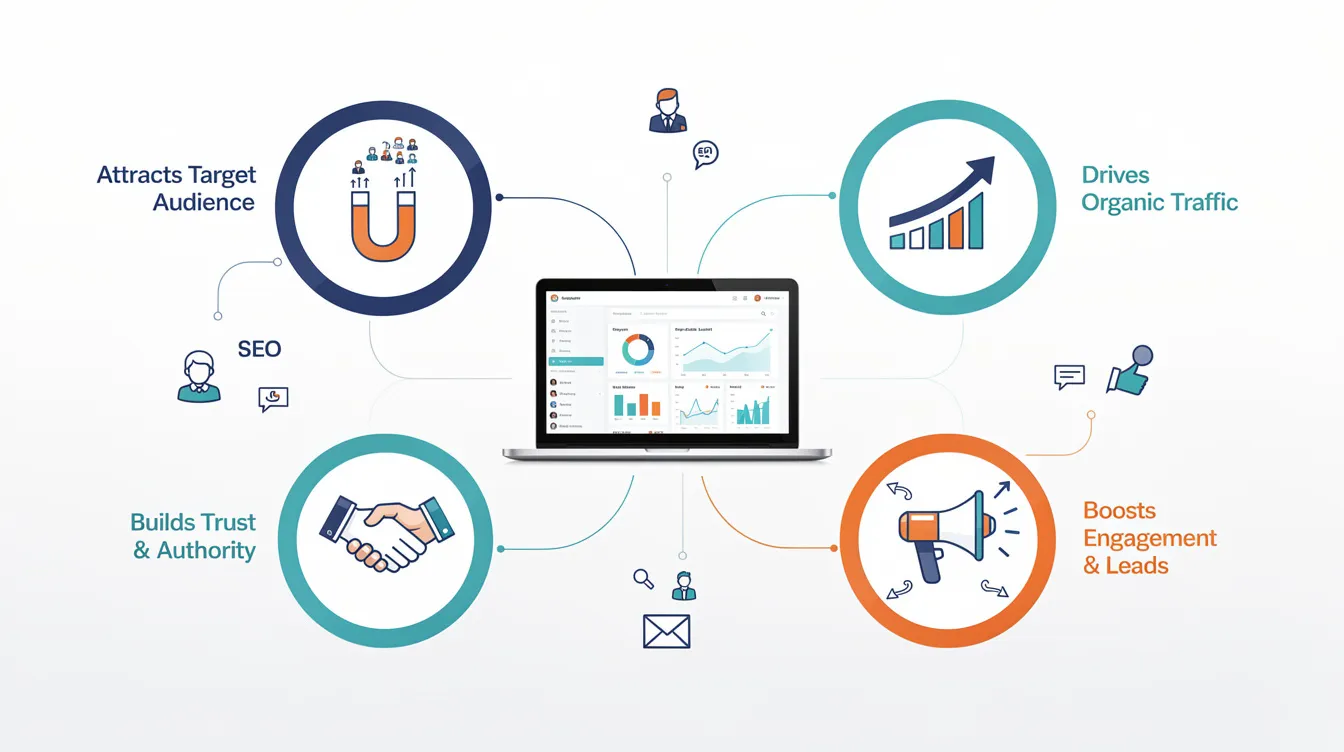
Content marketing strategies can come in many different forms. Mainly, this type of marketing is aiming to boost engagement and build trust in your business. To do this, you must be able to prove to customers the value your business can provide and also create good enough content that users will want to interact with and share. Some of the most common types of content marketing are:
-
Video Content - Educational, short form videos such as tutorials and product demonstrations can be some of the best forming type of content and boost your engagement among customers searching for tips and help
-
Blog Posts - These are able to be constantly updated with new information, focused on high performing topics, and have long lasting impacts as they gain more attention online and bring more users to your website
-
Customer Testimonials - Getting reviews and testimonials from past customers helps to show the effectiveness of your business and how you are able to help users and provide value to them. This also helps with your online presence as the more 5 star reviews you have the more likely users will be to visit your website when searching for a product or service they need
Steps For Creating a Content Marketing Strategy
Building a content marketing strategy will take careful planning and a layout of your main business purposes. This starts by clearly defining your business goals, understanding your audience, knowing the best topics to make your content on, and creating a clear schedule for producing content. Having a set process and schedule transforms your efforts from random postings to a goal oriented strategy.
Creating SMART goals for your content marketing strategy will help to track and evaluate how your business is performing and the impact of your efforts on conversions, views, impressions, and interactions. Before you implement your strategy, you should outline a set of activities that you will be focusing on that will help you reach your set goals and improve awareness for your business. A list of things such as:
-
Creating educational blog posts
-
Product demonstrations
-
Highlights of customer reviews and testimonials
-
A consistent social media upload schedule
Defining A Specific Audience
Targeting a specific audience will help get more engagement compared to trying to target "everyone" which can lead to wasting money reach people who are not interested in your product. Identifying this audience will require you to look at available data using tools such as Google analytics, questions from customers that are frequently asked, social media insights and polls, and conducting your own research through search engines and tools.
Creating Relevant and Engaging Content
Rather than making a schedule to post content every single day, it’s more important to focus on the quality of the content you are posting. Tailor content to the specific needs and interests of your audience by developing customer personas and customizing your marketing efforts. Especially when it comes to your blog posts and social media, you want to create content that is relevant to your industry and what your audience actually needs. For example, if you are a landscaping business it would make sense for you to produce posts that talk about how to maintain your yard or seasonal planting guides.
When creating blog posts, share insights to demonstrate your expertise and build credibility with your audience. Regularly posting fresh content is also essential to attract attention and improve your brand visibility. Additionally, consider using AI tools to brainstorm, outline, edit, or repurpose content efficiently.
Producing content that is relevant to your business industry is very important, as this is what matters to your customers and will help to build trust between you and them. This seems like a pretty clear observation, but if you are a party planning business that posts blogs on the current events in the news these will more than likely not perform well.

Measuring The Effectiveness of Your Content Marketing Strategy
To know what type of content is performing well it's important to have tools set up to be able to track the data on. There are multiple free tools online that are able to give you metrics on the amount of views, clicks, and time spent on your specific web pages. Having access to this information allows you to know what topics your most popular content is on, and can make it easier to know what type of content your audience is engaging with.
It's important to set goals, as mentioned before, and to follow up on how you are meeting these goals after a set amount of time. Commonly businesses will set quarterly goals to track, which helps to adjust based on how you are either over-performing or underperforming. If you notice one type of content that is popular, you can quickly capitalize on this if you are tracking data on these pages to produce similar content. For example, consider you are a photographer and create a blog post and social media content on the best local wedding venues for summertime and get increased traffic or booking from this. In turn, you know your audience enjoys this type of content and can produce more such as the best venues for fall or springtime that you already know your audience will connect with.
These data driven decisions small business owners make can make a huge difference in your success, especially when trying to make the most out of certain trends you find or a boost in a certain type of content.
Analyzing Competitors Content Marketing Strategies
When starting a content marketing campaign as a small business owner, a good early step would be to look at what top competitors and top performers in your industry are doing that is performing well. As a small business, you are able to more easily change your tactics based on current trends you see performing well due to your size. This research can also give you more ideas of the type of content you can potentially make, although it's important to ensure you are not copying your competitors ideas exactly and make them your own.
After gathering around 3-5 competitors to analyze their data, especially when it comes to social media content, blogs, or UGC (user generated content), it's time to implement any ideas you gain from this into your actionable content marketing plan. Using this data should identify certain industry trends and allow you to create more relevant content for your business.
Creating a Content Calendar
A content calendar is something that any small business needs if they want to get the most out of their content marketing. When you plan your content ahead of time, you can make sure that your marketing is consistent and on time, and that it matches up with what your business is trying to do overall. Having a content calendar that is set up right lets you figure out what kind of content you want to make, when you want to publish it, who you are trying to reach with each piece, and where you want to share it.
Doing market research and looking at what your competitors are doing with their content marketing can give you good ideas about what topics and formats are working well in your industry. This research helps you see what trends are happening and where there might be gaps in the market, so you can plan your content calendar to deal with what your audience needs and wants. When you schedule content around important dates, seasonal trends, and business milestones, you can stay ahead and make sure your content stays relevant to people.
For small businesses, having a content calendar doesn't just save time and reduce stress when you're rushing to get something out, but it also makes you more productive by giving you a clear plan for creating and sharing content. Whether you are planning blog posts, social media updates, or email campaigns, using a content calendar helps you stay organized and focused on making valuable content that helps your business grow.
Distribution Channels
Choosing the right distribution channels can be a critical part of any successful content marketing strategy that you want to implement. For small businesses, using a mix of distribution channels can ensure your content reaches your target audience and can support your business objectives that you are trying to achieve. Social media channels, such as Facebook, Instagram, and LinkedIn, can be excellent for sharing social media posts that can engage existing customers and can attract new ones as well. These platforms can allow for real-time interaction and can help build brand awareness through regular updates and user interaction which is beneficial for your business growth.
Email marketing can be another powerful distribution channel that you can use, and it can be ideal for nurturing leads, sharing personalized content, and can drive website traffic to your business site. By segmenting your email lists, you can tailor your messages to different audience groups which can increase the likelihood of engagement and conversions that you are looking for. This approach can help you deal with different customer needs and can make your marketing efforts more effective.
Your business website can also serve as a central hub for your content marketing efforts that you are implementing. Publishing valuable content on your site can not only attract visitors but can also improve your search engine rankings and can establish your authority in your industry which is important for business credibility. Having good content on your website can help you deal with competition and can make your business stand out from others in your field.
By carefully selecting and optimizing your distribution channels, you can ensure your content marketing efforts can be effective, and can reach the right people at the right time, which can ultimately support your business growth that you are working towards. Understanding how to use these channels can help businesses manage their marketing better and can allow for more clear results between different marketing approaches you might be using.
Keeping Content Fresh and On a Sustainable Schedule
When you are first developing your content marketing strategy, it's good to keep in mind that you will need to be able to stay consistent with whatever your plan ends up being. This means that if you decide to create a blog post and a social media post every single day on your own, you will likely not have enough time and run into issues with either burnout, ideas, or both.
A common social media schedule could be a post every other day, or a 3 post a week schedule to give you time to focus on other things. Blog post schedules can vary depending on the type of content you are writing and the length of your typical post. For starters, it can be useful to aim for 1 post a week, or around 5 posts per month. This will help you get used the process of writing these blog posts and start to build out your topical map and build authority.
Set realistic goals that you are able to accurately measure. Aim high, but not so high that you will never be able to meet your goals. Content marketing efforts will typically see a gradual growth instead of a sharp increase that other forms like paid advertising will bring. The focus of these campaigns is to be consistent, produce valuable content for users, and provide accurate and updated information.
Main Advantages of Content Marketing
Some of the top advantages of content marketing for a small business will include:
-
Cost effective way to advertise and grow - Content marketing gives your business a chance to build brand awareness and authority in your industry with customers by producing content that is helpful and educational. This creates a good way to be able to improve your online presence, SEO efforts, and get more traffic to your website or your business. It is typically done through employees creating the content so it is cost effective compared to paid advertising and big marketing campaigns.
-
Improving SEO rankings - Having a consistent content schedule that provides users with helpful high quality content will signal to sites such as Google that your website is a valuable and worthwhile place for users to find information. As you increase your authority and amount of content, your rankings will grow and send more users to your website.
-
Building Authority and Trust - Uploading helpful, educational content rather than being overly salesy will lead to users being more trust of your site and more likely to click on and engage with your content. Building out your topical map also will give you more coverage of topics in your industry that people care about and signal to them that your website is a good place to get expert information on issues in your industry.
-
Customer Engagement and Long Term Value - The more customers are engaging with your content the more popular google will assume it is. Creating content customers actually are looking for is important for boosting it naturally, as well as keeping it popular and recommended to users as time goes on. Being an authority for specific topics in your industry will provide long term results and since these are online they will not go away or be forgotten about. To ensure the longevity of posts, be sure to revisit and update them as new information comes out or regulations change to continue to provide accurate and relevant information to users. Email marketing allows for direct and personal communication, which can be customized to individual preferences.
-
Make Your Brand Stand Out - Creating a content strategy that is unique and valuable helps your small business stand out compared to others. Especially if other businesses in your industry are not actively taking a part in any content marketing, having informational guides and tips and tricks can drive more traffic to your site. Collaborating with other businesses, influencers, or partners through co-created content and strategic partnerships can help you reach new audiences and expand your brand’s visibility. Being an authority for informative content in your industry makes customers more likely to recognize your brand online which can increase sales when users are looking to make the decision to purchase products, services, or seeking information that relates to your business industry to help them along in the purchasing process.
-
Build an Email List for Direct Communication - Building an email list allows for direct communication with customers, giving you a reliable channel to share updates, promotions, and personalized content.
Creating a Lasting Content Marketing Effort
Getting starting on a content marketing strategy can feel difficult enough, but staying on top of your schedule and content creation plan can be ever harder. Once you have started to post content to either your business website or social media, it's important to continue to stay consistent to keep engagement up and keep your topics relevant. To maximize your reach and engagement, plan how you will distribute content across relevant channels, tailoring your approach based on where your audience is most active. It can feel like you have covered every possible topic or tried creating every type of social media post, but there is always something new whether that's in your specific industry or something that is emerging as a general trend online.
Mixing up your posts between static images, short videos, product descriptions, educational blog posts, comparisons, and how to guides can make it easier to get ideas and make your business feed not feel like you are posting the same type of thing every week.
There are multiple ways to go about a content marketing strategy, but the main focus should be on providing valuable content to users that are interacting with your website and social medias. Be patient, keep on posting, and refine your posts according to what you discover works best.
How To Put It All Together
Content Marketing efforts can be an essential factor in growing small businesses with a low budget for advertising. The cost effective and DIY aspects of this strategy are the main advantage of this, and small business owner should focus attention to have at least some sort of plan for producing content that will be deemed educational or helpful to users and customers.
Start with a plan or a schedule for consistently producing this content, and aim to build authority and awareness of your business. The longer you are consistent with your content strategy, the better results you will see. These things grow on themselves, and as you produce more and more content typically you will see better metrics for impressions, clicks, engagement, and time spent on your website or around your business.
Track your data to be aware of your most popular and effective content, as well as content that is not performing well. Having this information can give insights into topics you should be giving more attention to and be a driving factor in the type of content your business should plan on producing. These data driven decisions are essential in getting the most out of your content marketing strategy and ensure your business is able to capitalize on certain trends and popular topics in your industry.